

July 3, 2026 l BusinessWorld
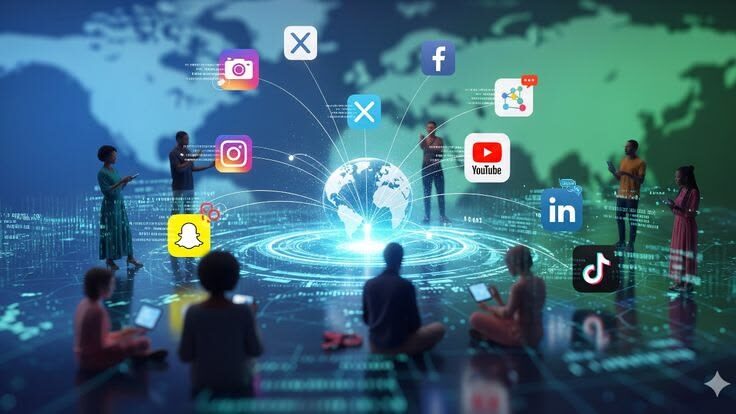
Why is it that despite the abundance of publicly available information about political personalities — their statements, actions, inconsistencies, and even documented misconduct — the truth often fails to persuade a core loyal following? Why do labels such as “pink,” “yellow,” “DDS,” or “Marcos loyalist” endure despite evidence that defies these stereotypes? Why do political narratives remain stubbornly intact long after they have been debunked?
The answer lies not only in politics, propaganda, or fake news. Increasingly, one of the most powerful yet least visible forces shaping public opinion is the algorithm.
Algorithms have quietly become among the most influential political actors of our time.
Most people associate algorithms with convenience. They recommend the next movie to watch, the next song to listen to, or the next product to buy. By analyzing our online behavior, they predict what captures our attention and serve us more of it.
That personalization is remarkably effective. It is also profoundly consequential.
The same algorithms that curate our entertainment also curate our news. Every click, “like,” share, comment, and even the amount of time we linger on a post tells digital platforms what interests us. Their objective is simple: maximize engagement. The longer we stay online, the more advertising revenue they generate.
The crucial point is this: algorithms are designed to maximize attention — not truth.
If we frequently engage with posts praising a particular politician, our feeds will offer us more of the same. If we habitually watch videos attacking another political camp, similar content quickly follows. Over time, opposing viewpoints gradually disappear from our screens, replaced by an endless stream of messages reinforcing what we already believe.
Without realizing it, we begin living inside carefully constructed echo chambers.
The internet was supposed to democratize knowledge by exposing us to an unprecedented diversity of ideas. Instead, personalization often narrows our intellectual horizons. Random discovery gives way to predictability. Contradictory evidence becomes scarce. Nuance is replaced by certainty.
Algorithms amplify what psychologists have long called confirmation bias — our natural tendency to seek information that validates our existing beliefs while dismissing evidence that challenges them. Technology has simply automated this human weakness on a massive scale.
Even more troubling is that social media algorithms frequently reward outrage. Research consistently shows that emotionally charged content — particularly anger, fear, and indignation — generates more engagement than thoughtful, balanced discussion. As a result, divisive narratives spread faster than measured analysis. Extreme voices receive greater visibility than moderate ones, not because they are more credible, but because they keep users clicking.
The consequences extend far beyond politics.
Communities become polarized because different groups are no longer debating differing opinions based on common facts. They are consuming entirely different versions of reality. Facts presented by the other side are dismissed as propaganda, while misinformation that confirms one’s beliefs is readily accepted.
This helps explain why simply presenting evidence rarely changes minds. Facts alone struggle to overcome years of algorithmically reinforced beliefs. By the time contradictory information appears, many people instinctively reject it as biased or fabricated.
The algorithm has already done its work.
Technology itself is not the enemy. Algorithms have transformed medicine, education, commerce, and communication for the better. The challenge is ensuring that technologies designed to maximize engagement do not end up maximizing division.
What, then, can be done?
The first responsibility lies with each of us.
We need to cultivate a healthier information diet. Intellectual health requires exposure to diverse perspectives. We should deliberately read publications with different editorial viewpoints, listen to commentators we do not always agree with, and resist relying on social media alone for our understanding of national issues.
Equally important is the revival of critical thinking. Before accepting sensational claims, we should ask simple questions. Who is the source? What evidence supports the claim? Is there corroboration from independent and credible outlets? Healthy skepticism is not cynicism; it is responsible citizenship.
We must also relearn the art of active listening. Listening respectfully to opposing viewpoints does not require agreement. It requires intellectual humility — the recognition that none of us possesses a monopoly on truth.
Schools likewise have a vital role to play. Digital literacy should become a core competency, teaching students not only how to find information but also how algorithms shape the information they receive. Understanding how online platforms influence perception is now as essential as reading and mathematics.
Technology companies must likewise accept greater responsibility. Platforms should provide greater transparency about why content is recommended and explore ways of exposing users to credible, diverse perspectives.
The Philippines faces enormous challenges — from inflation and education to governance and economic competitiveness. These problems demand thoughtful debate grounded in evidence. Yet meaningful dialogue becomes impossible when citizens inhabit separate digital worlds.
Democracy does not require uniformity of opinion. It requires a shared commitment to facts, reasoned discourse, and a willingness to revise our views when presented with credible evidence. The healthiest democracy is one where citizens have the curiosity to venture beyond their own echo chamber.
Algorithms are powerful tools. They can broaden minds or reinforce prejudice, unite communities or deepen divisions. Whether they become bridges or barriers depends ultimately on us.
***The views expressed herein are his own and do not necessarily reflect the opinion of his office as well as FINEX. For comments, email benel_dba@yahoo.com. Photo is from Pinterest.