

September 16, 2026 l Business Mirror
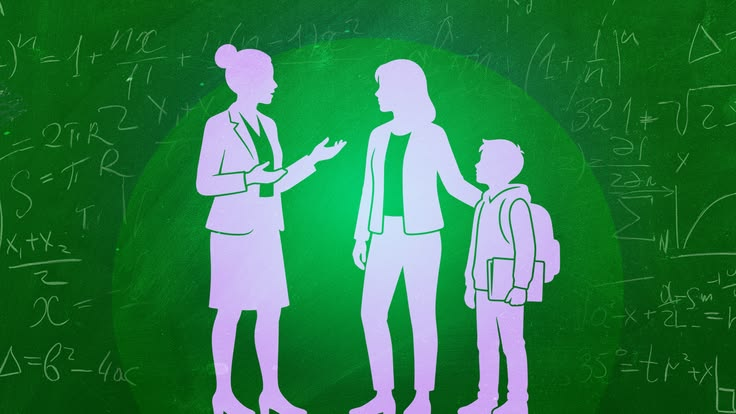
In a span of two months, campus violence involving the youth exploded in Tacloban and Zamboanga- spiced by 5 campus stabbing incidents in between them. Some 50 violence-related incidents have been likewise on police blotter from January to August of 2026. What is happening?
Many reasons have been cited, among them, the lack of parental supervision and bad influence of social media. Due to economic pressure, however, we have many solo parents or parents who went abroad to work, leaving the nurturing part missing.
Nations like Indonesia and Australia have outlawed the use of social media for those below 15 years old. Yet sophisticated as it may be, Australia, per CNA TV, disclosed that still about 40 percent of those below 15 are still using the social media outlets today. Correctly identifying their age through their gadgets had posed technical difficulties to the Aussie authorities.
Here, given the recent antecedents, Congress should immediately pass the appropriate amendments to “School Safety Act” pronto. Likewise, attention more to mental rather than intellectual attention must be forged on campus. For instance, ideally one Guidance Counselors is needed per 1,000 students. However, the Philippines has only 5,000 guidance counselors serving 47,000 public schools in the country. An additional 10,000 guidance counselors are needed to achieve the ideal ratio. But potential applicants are few and far between primarily due to the requirement that they must have a master’s degree (of a related field) to become one.
Alternatives like hiring Counselor Associates is being worked out where an applicant who has 8 Behavioral Science units and a Civil service eligibility can be considered. Salary Grade 16 at P28,000 per month has been recommended for counselor associates. Hopefully, this will help remedy the gaping backlog in guidance counselors.
For decades we have advertised the country as having a “sweet spot” with a large “working class” available for hiring. But that is a mirage since beginning 2018, the Philippines has been rated the lowest among 90 participating nations in the PISA (Program for International Student Assessment) marking proficiency in reading, math and science of 15-year-olds (junior and senior high school from 2019-2024).
About 23 million were considered “functionally illiterate” so where is this “sweet spot”?
We may have improved a lot in 2025 compared to the 2022 results but woefully, the Philippines’s ranking is still in the lower 70s out of 90 nations. What brought us to this?
While other nations give an upper hand to those affecting social capital, our Education Budget for 2027 is 3.5 percent of GDP, lower than 4 percent in 2026, despite a clear Constitutional mandate that education must have the top billing in the General Appropriation Act (GAA).
There also is the age-long problem of a deficiency of 141,000 classrooms. Rep. Roman Romulo warned that some 50,000 of the existing classrooms will be declared “condemned” by 2028 as they will be “50 years old” already. The Lower House must now pay attention to the proposed amendments to the “Adopt a Classroom Law” to determine better tax breaks and “naming rights” for the sponsoring private entities to help alleviate the shortage.
Of course, everyone knows that the Philippines also has a shortage of teachers, many of whom are given extra administrative and election chores, leaving them exhausted and underpaid.
Compounding the woes of Philippine education is the stunting due to malnutrition of children below 5 years old, which prevents them from achieving their full intellectual and physical potentials. It is a scientific fact one cannot argue against.
The current attempt to address this is the government’s effort to “feed nutritionally” the kindergarten and Grade One public school students, which already costs us P27 annually. Could one imagine feeding well all children below 5 years old just to give them an even chance at making it in life?
Resolving these problems require considerable investments. If the huge sums that went to flood control scams were channeled instead to education, we could have somehow addressed the pressing need to safeguard our precious human capital. Let’s shape up.
***The views expressed herein are his own and do not necessarily reflect the opinion of his office as well as FINEX. For comments, email bingo8dejaresco@gmail.com. Photo is from Pinterest.