
August 7, 2026 l The Manila Times
In a delightful essay for The Economist, Catherine Nixey argues that Homer’s “The Odyssey” is not merely a tale of sea monsters and wandering heroes, but a learning guide to the dilemmas of the modern world.
To Nixey, Odysseus is a veteran struggling to find his place after war, an imperfect leader promoted beyond his competence — a humorous embodiment of the Peter Principle — and a traveler navigating a world where “the old certainties have died.”
To Filipinos, however, “The Odyssey” suggests an even more unsettling question: What if Odysseus is us?
For decades, the Filipino people have been on their own long voyage toward an elusive Ithaca — not simply a homeland, but a nation where justice is impartial, institutions are strong, opportunity is widely shared and public office is regarded as a sacred trust, rather than a family inheritance.
Like Odysseus, we long to come home.
Yet, every election, every crisis, or every promised reform seems to carry us farther from shore.
Meanwhile, back in Ithaca, Odysseus’ wife Penelope waits.
In the epic, Penelope faithfully guards her home while scores of suitors occupy Odysseus’ palace. They consume its wealth, exploit its resources and compete not because they love Penelope, but rather covet the kingdom she represents.
The metaphor is difficult to ignore. Our own Motherland often resembles Penelope — patient, enduring, endlessly courted by those who profess devotion while pursuing power. The palace is crowded with familiar surnames. Fathers become governors, sons become congressmen, daughters become mayors, spouses exchange offices and political influence passes from one generation to the next, as though public office were an heirloom rather than a public trust.
Not every political family governs poorly. Many have served with distinction and integrity. The problem is not bloodline but entrenchment. When political competition gives way to hereditary succession, democracy quietly loses one of its greatest strengths: the continual renewal of leadership through merit.
Fatal mistake
The irony is that the Philippine Constitution anticipated this danger. The State shall guarantee equal access to opportunities for public service and prohibit political dynasties “as may be defined by law.” But the framers’ fatal mistake was entrusting Congress — whose members would often be beneficiaries of political dynasties — to define and prohibit the very practice from which many derived their power.
Four decades later, the enabling law remains unwritten. The suitors are still in the palace.
Nixey humorously portrays Odysseus as an illustration of the Peter Principle: an exceptional warrior promoted into management without the skills leadership demands. The satire contains an uncomfortable truth. Winning elections and governing wisely are not the same profession.
Too often we mistake popularity for competence, celebrity for character, confidence for judgment and family pedigree for public service.
Leadership requires more than charisma. It demands integrity, strategic thinking, institutional discipline, respect for evidence and the courage to make difficult decisions that may not produce immediate applause.
Many of our disappointments begin not after elections, but before them. Our voyage has also become more dangerous because the monsters have changed.
The Cyclops no longer blocks narrow straits. Instead, fake news narrows our understanding of reality. The Sirens no longer sing from rocky islands. Troll farms and algorithm-driven outrage lure citizens toward comforting falsehoods while drowning out inconvenient truths. Like Odysseus’ sailors, we risk steering toward destruction while believing we are following the safest course.
Perhaps the greatest monster is the echo chamber. Digital life surrounds us with voices that mirror our own. We read what we already believe and dismiss what we do not. A democracy that stops listening stops learning. This is why perseverance alone will not bring us home.
Odysseus endured storms, temptation and despair, but endurance without direction is drift. National renewal requires conviction: that integrity matters more than popularity; that competence outweighs celebrity; and that institutions are stronger than personalities.
Many Filipinos ask why the “gods” seem unwilling to bless our journey toward good government, lasting peace and shared prosperity. Perhaps Homer offers an answer. The gods help those who first choose wisely.
Athena could guide Odysseus, but she could not row the ship for him.
In a democracy, there is no deity descending from Olympus to rescue inattentive citizens. The ballot is our compass. Every election asks whether we will again reward familiar names, comforting myths and manufactured outrage — or whether we will choose leaders because they possess the competence, character and vision to govern.
Our real Ithaca has never disappeared. It waits beyond the storms of disinformation, dynastic politics, polarization and civic complacency.
One day, our Penelope, the Motherland, will no longer be surrounded by suitors who seek only power. One day, the palace will once again belong to its rightful stewards: the Filipino people.
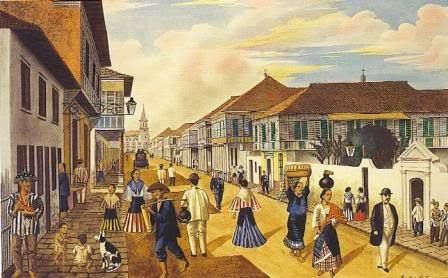
***The views expressed herein are his own and do not necessarily reflect the opinion of his office as well as FINEX. For comments, email benel_dba@yahoo.com. Photo is from Pinterest.