

April 17, 2026 l The Manila Times
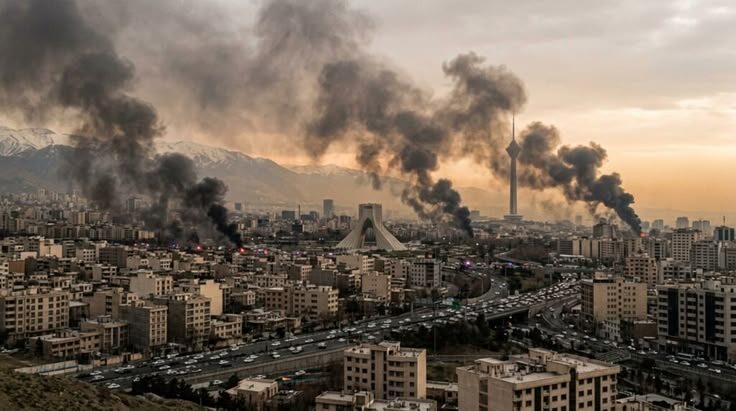
The Iran war exposed the vulnerabilities of the Philippines. We should take advantage of the energy crisis spawned by the war to address these weaknesses. The crisis provides us with opportunities that we should not squander as a nation.
The first priority that should be addressed is food security. We are the world’s largest rice importer. In 2024, we bought 4.68 million metric tons of the staple.
We also rely on imports for a large share of our requirements for pork and chicken. Total chicken imports in 2024 were over 472,000 metric tons (MT). Meat imports in 2025 jumped even higher to 1.64 million MT.
Government studies show that the key factors causing these import dependencies include low farm output, inadequate postharvest facilities, high production costs and limited agricultural land expansion.
The Comprehensive Agrarian Reform Law of 1988 worsened the situation.
The global supply chain disruptions caused by the Iran war, coupled with a weakening peso, could lead to higher prices and food shortages.
We are starting to see the dwindling supply of rice in the market. If the war is prolonged, supplies could reach a critical level and would affect the most vulnerable segments of society.
There were recent government initiatives that were programmed to address key factors causing our import dependency before the war broke out. These simply need to be implemented.
Under President Ferdinand Marcos Jr.’s Masaganang Agrikultura, Maunlad na Ekonomiya program, corporate participation is encouraged to push farm consolidation and modernization.
The Department of Agriculture is also promoting cooperative models fostering partnerships between private firms and smaller farmers to offer management capabilities, technology, market access and capital. This is an opportunity that needs implementation to avert a food crisis.
The fuel crisis stressed our dependence on foreign oil. We have not been able to manage the fuel price spikes. We are already seeing the spiraling inflation caused by the oil shock.
Diesel prices recently breached P 170 per liter. Last month, the country topped a list showing comparative diesel price increases in Asia. The Philippines had a 97-percent diesel price hike vs Thailand’s 46, Malaysia’s 45, Vietnam’s 35, Singapore’s 29 and Indonesia’s 9 percent.
Our Asian neighbors subsidized fuel prices at once because of better circumstances. We hesitated because of our weakening economy and a P18-trillion national debt overhang. It is not an easy decision because other government programs will be sacrificed.
On April 7, the president finally signed the law suspending or reducing excise taxes on petroleum products. Many economists share a common consensus on the way forward to address fuel dependency. It is different from the political solutions being proposed.
I am referring to the news about the possible government takeover of Petron and the government’s willingness for joint oil exploration with China in the West Philippine Sea (WPS). San Miguel recently reiterated its willingness to give up control of their stake in Petron, “if government believes it can manage the company better.”
Although these two options seem to be gaining populist appeal, most Filipinos do not believe that the government can do a better job.
Better alternative
The pragmatic appeal of co-exploration would also mean giving up our legal territorial claims in the WPS. A better alternative is to adopt the same approach that Malaysia and Vietnam implemented. They just went ahead and unilaterally explored energy resources in their territories despite constant Chinese harassment.
They were able to do it because they had built strong naval forces to protect their explorations. This was their advantage.
We are slowly getting there ourselves. The Philippine Navy is advancing its modernization program which includes new frigates, corvettes and a future submarine program. We need to develop this territorial defense capability to develop our energy resources.
In the short term, we should start building our own strategic reserves and refinery capacity, once the Iran war ends.
***The views expressed herein are his own and do not necessarily reflect the opinion of his office as well as FINEX. For comments, email rsgoseco@gmail.com. Photo is from Pinterest.