

February 25, 2026 l Business Mirror
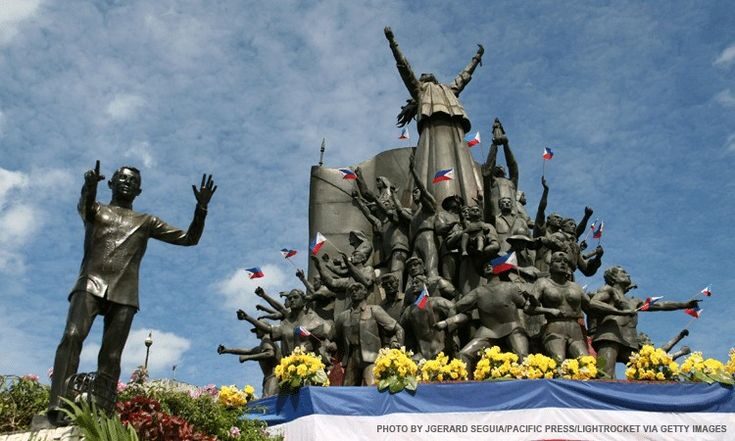
As we commemorate the 40th anniversary of the Edsa People Power Revolution, celebrations across the nation reflect on those four glorious days that inspired nonviolent democratic movements worldwide and became a defining moment in Philippine history. The uprising’s legacy continues to influence debates on reform, governance, and inclusive growth four decades later.
In February 1986, millions gathered along Edsa and other major cities—forcing a peaceful transition of power that ended the 20-year rule of Ferdinand E. Marcos Sr. The ascendance of Corazon “Cory” Aquino to the presidency marked more than a political reset; it triggered a structural economic pivot whose effects are still visible today.
Back then, the economy was emerging from its worst crisis since World War II. Gross domestic product (GDP) had shrunk sharply in 1984-1985 amid a debt default, crony monopolies, and capital flight. The early post-Edsa years focused on restoring the country’s macroeconomic credibility by restructuring foreign debt, liberalizing trade, dismantling monopolies tied to the Marcos regime, and rebuilding investor confidence.
GDP growth rebounded between 1987 and 1989. Despite political instability brought about by at least seven military coup attempts, the overall momentum shifted from contraction to recovery. Just as crucial was the restoration of constitutional rule. A free press, orderly elections, the revival of Congress, and an independent judiciary were key ingredients for transparency and long-term economic development.
The reform momentum carried into the next decade, although it was slowed down by the Luzon earthquake in July 1990 and the Mount Pinatubo eruption in June 1991. Tariff reductions and privatization of state assets deepened the economy’s integration into the global markets. The Ramos administration’s drive to deregulate the telecommunications and banking industries accelerated foreign direct investment and infrastructure expansion.
However, the Asian Financial Crisis of 1997 tested the post-Edsa model. Though hit by currency depreciation and capital outflows, the Philippines avoided systemic collapse unlike some of our neighboring countries. Structural reforms from the late 1980s softened the blow—particularly the more flexible exchange rate and stronger financial oversight.
At the turn of the millennium, remittances from overseas Filipino workers and a growing business process outsourcing industry became new growth pillars. Despite political upheavals during the first decade of the 21st century, democratic continuity reassured the domestic and international markets that institutional rules would endure beyond personalities.
By the early 2010s, improved fiscal discipline and anti-corruption campaigns helped the Philippines achieve investment-grade credit ratings for the first time ever. Tourism grew, infrastructure spending expanded, and GDP growth averaged between 6 percent to 7 percent for several years.
Unfortunately, the Covid-19 pandemic triggered the country’s deepest postwar GDP decline in 2020. Yet recovery was relatively quick, fueled by digitalization, remittance resilience, and fiscal stimulus. By the mid-2020s, renewable energy investments, a young labor force, and infra modernization continued to support medium-term prospects.
Forty years after Edsa, the Philippine economy is larger and more diversified as well as broader in terms of global integration. Per capita income has multiplied several times over, while poverty incidence has dropped substantially from its peak in 1985.
Edsa’s economic legacy is defined not by a single boom period but by institutional reset. The dismantling of crony monopolies opened space for competitive enterprise, as democratic accountability improved fiscal transparency and independent technocrats regained credibility in the international business community.
Those who say Edsa is a failure should realize that a revolution can open doors but cannot walk through it for the citizenry. The 1986 revolt was an episode of collective moral clarity; sustaining it requires consistent civic participation, institutional strengthening, and historical literacy across generations.
It’s not the Filipino people who failed EDSA either, but the ruling political dynasties that captured its gains. Economic inequality limited democratic agency, while reform coalitions fragmented and historical revisionism set in.
An important lesson for Filipinos of current generations is that political legitimacy and economic performance are intertwined. Markets respond not only to policies but more significantly, to trust in institutions. For the Philippines, Edsa marked the point when that trust began to be rebuilt after being eroded in the final years of authoritarian rule.
***The views expressed herein are his own and do not necessarily reflect the opinion of his office as well as FINEX. For comments, email nextgenmedia@gmail.com. Photo is from Pinterest.