

February 17, 2026 l Manila Bulletin
The cost of electric power in the Philippines remains among the highest in Asia. This is driven by a combination of high imported fuel costs, ongoing grid work-in-progress, significant system losses (five percent in Singapore versus 10 percent in the Philippines), and an oligopolistic market structure dominated by 11 key players.
These high power costs deter investment and fuel inflation, disproportionately affecting the working class. In a recent manufacturing forum, it was noted that power accounts for 25 percent of a firm’s total costs—and even higher for industries like paper, chemicals, and cement. For Small and Medium Enterprises (SMEs), electricity is typically one of the top three expenses, alongside rent and payroll.
The burden is equally heavy for households. Even those without air conditioning—relying only on fans, refrigerators, lights, and basic appliances—can see monthly bills between ₱1,500 and ₱2,500, depending on household size. This is a substantial chunk of income for a family of four with a single breadwinner.
Consider the math: In Metro Manila, where the average daily minimum wage is ₱670, a breadwinner earns roughly ₱14,740 per month (based on 22 working days) before taxes. Outside the capital, at ₱500 a day, that monthly take-home drops to ₱11,000.
Contestable energy customers
Last year, the Energy Regulatory Commission (ERC) lowered the threshold for “contestable customers” from an average peak monthly demand of 500 kW to just 100 kW. This move will definitely benefit SMEs and organized residential groups, allowing them to bypass their current utility provider and choose a Licensed Electricity Supplier that can offer tailor-fit pricing, better service, or more “environmentally friendly” power sources.
In most cases, this shift results in lower generation costs—potentially reducing that component by as much as 28 percent. This evolution fosters efficiency and competition, exerting downward pressure on prices. It also aligns with the government’s mandate for state offices to reduce power and fuel usage by 10 percent from their baseline year.
Guido Alfredo A. Delgado, energy expert and former CEO of the National Power Corp., identifies those likely to fall within the 100 kW bracket: restaurants with a floor area of 300 to 400 square meters, supermarkets (500 to 1,000 sqm), buildings under four stories, light industrial shops, gyms, diagnostic centers, and dialysis clinics.
Furthermore, because aggregation is permitted, villages, barangays, condominiums, chain stores, and middle-class subdivisions can qualify as “contestable energy customers” if their combined usage reaches 100 kW. Upper-class villages, according to Delgado, are almost certain to meet this threshold.
Smart meter requirement
Transitioning to this category requires the installation of a “smart” meter. At approximately ₱5,000, it is several times more expensive than a traditional meter. However, the benefits extend beyond mere savings; this technology allows for the computation of system losses at the low-voltage end, enables consumers to monitor consumption via mobile phones, and, in some cases, allows for the remote control of appliance usage.
The savings in generation costs should quickly offset the meter’s price. Delgado cites an example: In a Meralco franchise area, a typical household might save 50 centavos per kWh. In a high-density area like Valle Verde, the savings could be six centavos per kWh. Even with the cost of the smart meter, the payback period is estimated to be well within five years.
If aggregated customers can secure a discount of at least 50 centavos per kWh, the investment is clearly worth it. Extrapolate those savings across villages, SMEs, and LGUs nationwide, and the economic impact becomes significant. Consumers can even aggregate into cooperatives to secure bank financing for the meters or negotiate bulk purchase discounts from suppliers.
Efficiency reigns where competition works. We hope the government will make it easier—rather than harder—for those wishing to transition into the 100 kW “contestable customer” category.
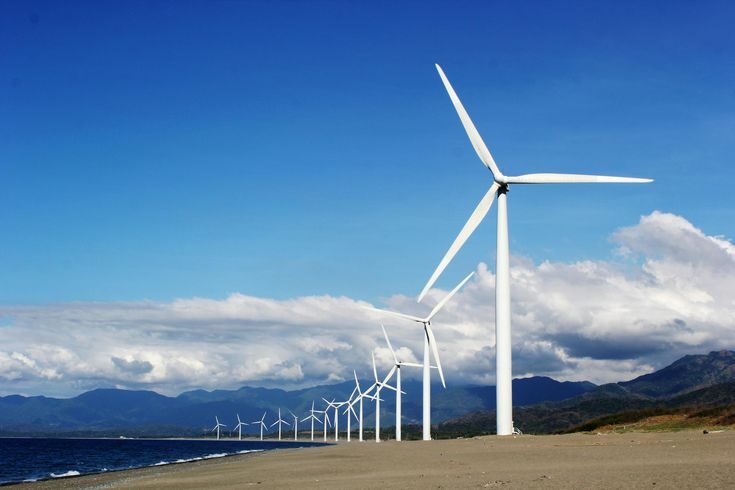
***The views expressed herein are his own and do not necessarily reflect the opinion of his office as well as FINEX. For comments, email bingo8dejaresco@gmail.com. Photo is from Pinterest.