

February 6, 2026 l The Manila Times
TORONTO, Canada — After 90 years of official tracking, January has gone down as the snowiest month ever recorded in this city.
We arrived at Pearson airport which experienced a record 46.2 cm of snowfall. Amid the bitter cold, there was the warm feeling of being with kababayan in every Sunday Mass we attended. It’s amazing that many Filipinos had moved not just here, but everywhere we visited.
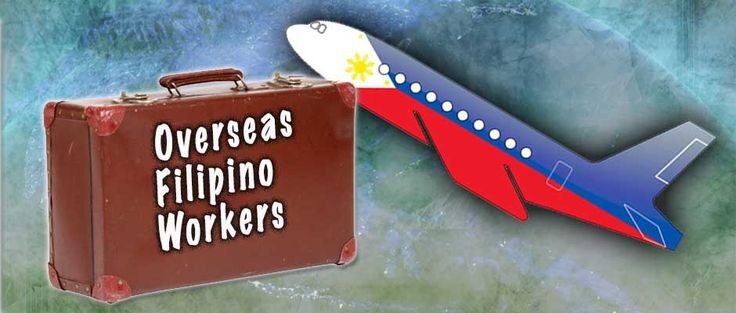
This is the Philippine diaspora — overseas Filipino workers and longtime immigrants who moved to other countries in search of better opportunities. They form a significant part of Filipino identity and global culture. This is the OFW story and our nation’s economic dependence on them.
OFW remittances, which the Bangko Sentral ng Pilipinas expects to grow to $36.6 billion this year, is asymptomatic to what economists describe as the Dutch disease. This is an economic phenomenon where a rapid, large-scale increase in international revenue from a specific sector — historically from natural resources, but in our case, human resources — has led to a weakening of other sectors, such as manufacturing, leading to de-industrialization and economic decline in other areas.
The OFW history began in the early 20th century when Filipinos started migrating to the United States, initially for agricultural work. After the colonial era, the nursing curriculum was aligned with the US, thus, nurses and other professionals followed suit.
The 1965 Immigration Act, on top of the 1928 Exchange Visitor Program, created a pathway for permanent residency in the US, which fueled massive and sustained immigration.
There was another major shift in OFW deployment in 1974 when the labor code of the Philippines was enacted. This established an official overseas employment program. Under President Marcos Sr., this state-sponsored labor export policy, crafted to address short-term unemployment, became a long-term economic pillar, with workers now totaling over 2 million.
Another sector, business process outsourcing (BPO), is contributing about $38.7 billion to the economy and employing over 1.3 million workers. The Philippines is now considered the premier destination for voice-based services, overtaking India, though the latter is still the leader in technology services.
However, the BPO sector is facing headwinds due to developments in artificial intelligence and automation.
And while OFWs and BPOs had provided significant exchange inflows and employment, these have not translated into broad-based, sustainable economic development. Structural weaknesses limit value creation, since most of the profits, or the value created, stays abroad.
OFWs and BPOs support household consumption and reduce poverty, but not productive investment. They fuel imports and services, but do not expand domestic manufacturing or agriculture.
This reliance on overseas and outsourced employment also makes the economy vulnerable to global shocks and geopolitical risks.
Deeper economic issues
Overreliance on OFWs and BPOs is caused by deeper economic issues. We have an underdeveloped manufacturing base, weak agricultural productivity, poor infrastructure and limited industrial policy and innovation support. Without strong domestic industries, foreign income inflows simply circulate within the economy and are consumption-oriented.
This type of growth raises income levels temporarily, but does not generate high-quality jobs and technological advances in the country. They are not engines of structural transformation, and the country stays dependent, unequal, and vulnerable.
We desperately need to get cured of this Dutch disease by shifting from labor export toward high-value domestic industries. To do this, the government must quickly resolve corruption issues and start advancing national industrial policies.
***The views expressed herein are his own and do not necessarily reflect the opinion of his office as well as FINEX. For comments, email rsgoseco@gmail.com. Photo is from Pinterest.