

September 18, 2025 l Manila Bulletin
For years now, countries around the world have been grappling with the problems of climate change. I’ve always thought that not enough people were truly paying attention to its negative effects. It was a personal belief of mine that people talked about it as if it were just another school subject, with only a few people actually doing much about it.
However, as I started researching for this article, I was surprised by what I found. A recent study by the World Economic Forum (April 25, 2025) revealed that 89 percent of the public wants stronger climate action. This directly contradicts my own perception that others don’t support this cause. Another study, published in Nature Climate Change, had an even more surprising finding: 89 percent of those who support climate action are unaware that they are the majority because they are the “silent majority.”
This phenomenon is what they call “positive personal perception” and “negative other people perception.” A person who supports climate action may believe they are one of the few who want to see something done about the severe effects of climate change, while the majority don’t care. Furthermore, this silent majority might care deeply but isn’t taking action because it mistakenly believes only a handful of people share its concern. It’s time to wake up and get rid of this false perception.
If this silent majority starts to act and becomes silent no more—if they realize they are the majority, not just in their country but globally—how will they act? How will they behave not only as citizens, but as voters, workers, and business owners? Will they remain passive spectators or, as The Guardian calls them, become “active shapers of their shared future?” How will this silent majority influence government leaders to take action toward a better environment and prevent the ill effects of climate change?
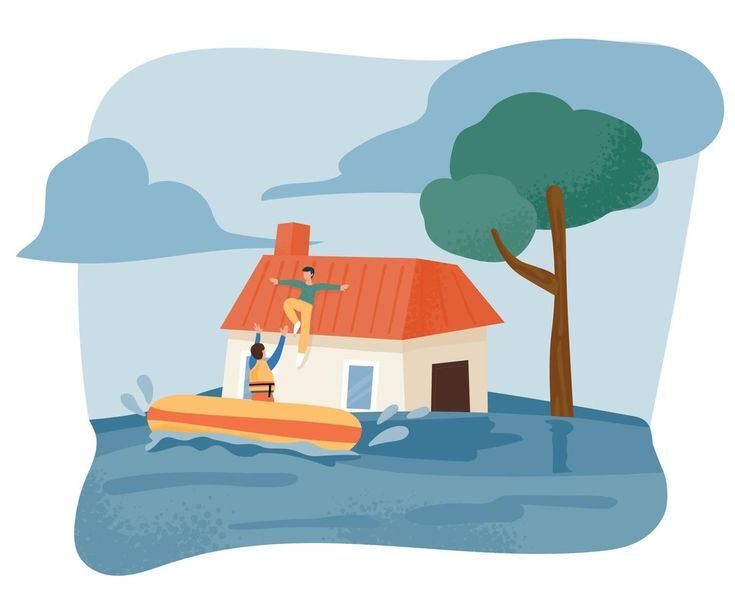
Here in the Philippines, floods are particularly disruptive and destructive to people’s lives. This is exacerbated by corruption in flood control projects. What were these engineers, contractors, and politicians thinking when they shortchanged the government—and the people—with public funds, all under the pretense of solving a serious problem? Did they think that climate change was just a call to be more environmentally conscious rather than a real issue that could prove catastrophic later on?
We’ve seen how areas that were once safe are now experiencing massive floods, and places that have always flooded are facing even worse situations than before. So, why is climate change causing all these floods? As temperatures increase, more water vapor evaporates, leading to stronger rains and storms that cause more widespread flooding. This temperature increase also means more droughts. Storms will intensify as more water vapor in the atmosphere becomes fuel for more powerful storms to develop. Additionally, rising sea levels are threatening higher locations that were once considered unreachable by water, exposing them to the erosive forces of waves and currents.
According to the 2025 Climate Index Study at germanwatch.com, the countries most affected in the long term (1993-2022) are divided into two groups: those affected by highly unusual extreme events (e.g., Dominica, Honduras, Myanmar, Vanuatu) and those affected by recurring extreme events (e.g., China, India, and the Philippines).
Effective flood control requires both structural measures (hard infrastructure like flood walls and dikes) and non-structural approaches (public awareness and land-use adjustments). But we’ve seen in the news and on social media how some of these structural projects are poor in quality or, worse, are “ghost projects.”
It’s sad enough that our country is on the list of those facing recurring extreme events, which means the risk of experiencing the severe effects of climate change is higher. But it is even sadder to think that despite being deep in debt, our funds are diverted into the personal pockets of the perpetrators.
But let’s not wallow in misery. Let’s do our part to help prevent the risks that climate change brings. Simple practices in our daily lives—like saving energy at home (especially if your electricity is powered by coal, oil, and gas), switching to an electric vehicle if you can, and observing the 4 Rs (reduce, reuse, repair, and recycle)—can go a long way. If the majority of people do their part and start to act, not just react, we can prevent or mitigate climate change risks.
***The views expressed herein are her own and do not necessarily reflect the opinion of her office as well as FINEX. For comments, email wimiranda@inventormiranda.com. Photo is from Pinterest.