

August 12, 2026 l Business Mirror
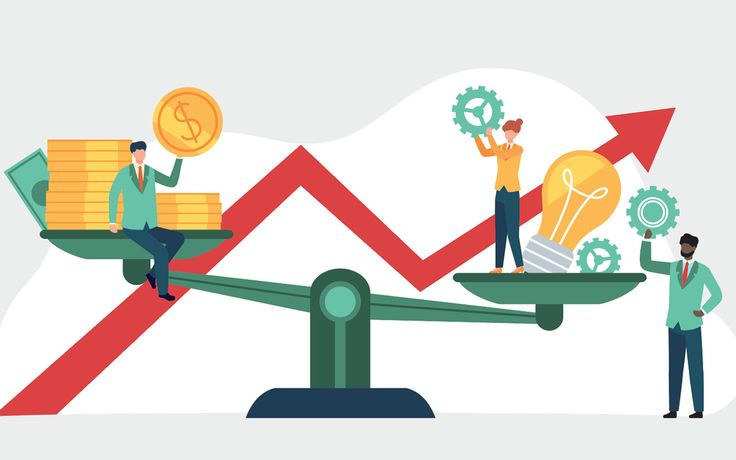
Basically, the simplest way to explain financial equilibrium is to think of being able to match your cash outflows with you cash inflows.
As an example, if your only source of income is what your account gets credited for your salary and you are able to pay off all your expenses from that ac-count with practically nothing left behind for investments and other unplanned or unprogrammed expenses then you are in a state of financial equilibrium.
There are those that think that being in financial equilibrium is a good thing. After all, many people are in a negative cash flow position and end up having to borrow money and make use of their credit card just to make ends meet. I agree that drowning in debt is indeed worse than being in financial equilibrium, which brings me to the point that you really should not be happy being just in financial equilibrium. Being in financial equilibrium is being in the proverbial “isang kahig, isang tuka” situation where you just make enough to live day to day.
You have to set your goals higher than just meeting your day to day expenses. If you cannot find a way to increase your income, then find a way to reduce your expense by prioritizing what you are spending on. Go through what your expenses are and focus on those that you can do without. Do you really need your daily Starbucks coffee before getting to the office or could you live off on hav-ing brewed coffee at home? Do you need to have a fine dining weekly date with your wife, or can you make to with a movie night?
It is imperative that you realize that you will have unavoidable expenses specially when you are starting off a family like having hospital expenses when you start getting children, tuition fees and other school expenses, and unforeseen expense from ageing parents, facing certain health issues, or a sudden setback in your career that puts your promotion on hold or worse losing your job. What do you do then? It is in your best interest to do something about it as early as possible, rather than wait for these things to overwhelm you.
Getting a higher paying job either through a promotion or moving into a new job is not as easy as it sounds. There are too many factors involved that are beyond your control or influence. Which makes cutting down on your expenses more doable. The whole point is to reduce your expenses to allow you to have a net savings. Once you have savings, a whole new world of opportunities opens up for you. Depending on how much you are able to save, the opportunities improve the bigger your savings are. As an example, bank time deposit rates becomes higher as the amounts gets bigger. A P10,000 time deposit will give you a lower interest rate than a P1-million time de-posit. Likewise, a P100-million time deposit will give you a higher interest rate than a P1-million time deposit.
Investment opportunities expand as your capital increases, such as fixed income bonds or listed equities. You could also look into investing in real estate to give you rental income and capital gain. You could also explore going into your own business or partner up with the right people. Financial equilibrium should only be your starting point where your ultimate goal is achieving financial freedom. How much is that? That is where sky is the limit.
***The views expressed herein are his own and do not necessarily reflect the opinion of his office as well as FINEX. For comments, email georgechuaph@yahoo.com. Photo is from Pinterest.