

June 27, 2025 l Manila Times
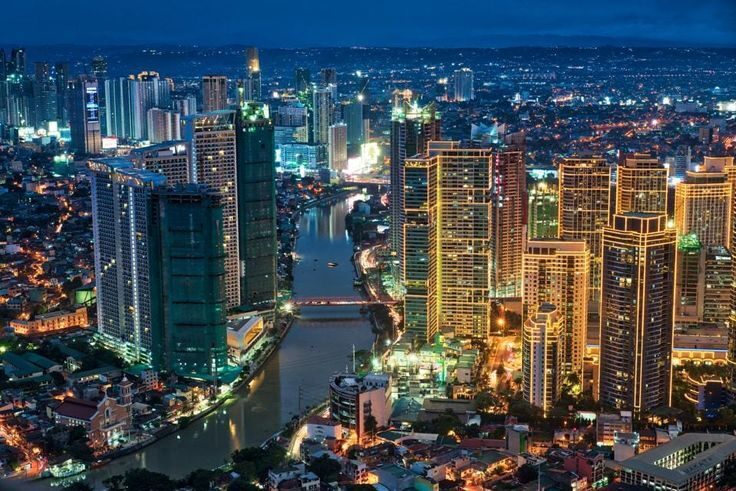
A recent report by the Economist Intelligence Unit (EIU), the research and analysis division of the Economist Group, said: “For the second year running (2025), living conditions have not improved in cities around the world, according to [our] latest livability index.”
The index assesses 173 cities across the world on 30 indicators divided into five categories: health care (20 percent), culture and environment (25 percent), education (10 percent), infrastructure (20 percent) and stability (25 percent).
“While scores in the first four categories have mostly remained constant or improved, gains have been offset by declines in stability,” said the report.
The EIU postponed the index in 2020 due to the pandemic.
In 2021, Manila ranked 109th with an overall score of 53.4 percent out of a possible 100. Manila was weakest in health care (41.7) and culture (45.4), ostensibly impacted by Covid-19 restrictions.
The Philippine capital improved in 2022, scoring 58.7 and ranking 105. Gains were attributed to easing restrictions and improved health and cultural conditions.
In 2023, progress continued with an improved score of 60.9, but ranking fell to 136th due to an expanded city list and varying performances elsewhere.
Stability slipped (55), but there were gains in culture (to 63) and education (to 66.7).
Little progress
The 2024-2025 ranking is not available, but the published reports put Manila at the 60-70 percent tier, an indication that little progress has been made.
Asia is the third-best region for livability, although its cities have a wider range of living conditions, with half of the top 20 places in East Asia and Australasia.
The top-tier Asian peers are Osaka, Tokyo, Seoul, Singapore, Hong Kong and Busan.
In the 2023 global snapshot on the Association of Southeast Asian Nations (Asean), Manila ranked below Singapore, Kuala Lumpur (Malaysia), Bangkok (Thailand), Ho Chi Minh (Vietnam) and Hanoi (Vietnam). Jakarta (Indonesia) sits slightly below.
Manila is generally in the lower-middle tier in this grouping, outranking only Phnom Penh (Cambodia) and Yangon (Myanmar).
In a 2024 column on the same topic, we wrote: “Livable cities are expected to be well-designed, sustainable and inclusive, offering a high standard of living with access to essential services, amenities, and opportunities for personal and professional growth.
“Manila is a city of contrasts, blending rich history with rapid urban development. Manila has the potential to offer a vibrant and diverse lifestyle. However, when examined through the lens of global livability standards, the city faces significant challenges.”
From the ratings, Manila’s lowest scoring category and weakest area is stability. Concerns include crime rates, perception of safety and potential civil unrest. The priority needs are strengthening law enforcement and accountability, improving community policing, addressing the root cause of crime and insurgency, and enhancing disaster preparedness and response.
Additionally, social inequality is evident, with a significant portion of the population living in poverty. This is crucial for attracting investment and tourism.
Manila’s mid-50s-60s health care score must improve to align with its Asean peers. Policies should focus on scaling up public health investments, hospital capacity and access to quality primary care facilities. Universal health coverage must be expanded, and health care workers should be incentivized to work in underserved areas.
Priorities
The mid-60s score in infrastructure shows moderate competitiveness, but it is way below top regional capitals in Asean. The priority needs are clear — massive investment in public transportation (metro system, bus networks), road networks (decongestion, maintenance), reliable utilities (water supply, electricity grids, reducing outages), improved telecommunications (broadband speed and reliability) and modernization of ports/airports.
Those are the foundations for economic growth and quality of life.
Improved scores in culture and education are good signs. Still, there have been many issues confronting not just Manila, but the whole country’s educational system and its capacity to produce graduates who can compete in a global environment.
Policies should reinforce cultural hubs, art districts, public spaces and bolster digital/hybrid education access.
Manila faces serious pollution problems. The city’s air is heavily polluted due to vehicle emissions, industrial activities and inadequate regulations. Waste management remains a challenge; many parts of the city grapple with uncollected garbage, leading to clogged drainage systems and frequent flooding.
The highest tier of livability is defined as a score of 80 or above, where “there are few, if any, challenges to living standards.” Getting there is a tall order. The realistic objective is to reach the 70-80 tier in the overall rating, where “day-to-day living is fine, in general, but some aspects of life may entail problems.”
The Economist noted that the outlook for improving living standards in cities worldwide is affected by increased geopolitical tensions. The Philippines is not immune from this concern, but it can still improve its scores/standards, and hopefully move up in the rating.
***The views expressed herein are his own and do not necessarily reflect the opinion of his office as well as FINEX. For comments, email benel_dba@yahoo.com. Photo is from Pinterest.