

July 17, 2026 l The Manila Times
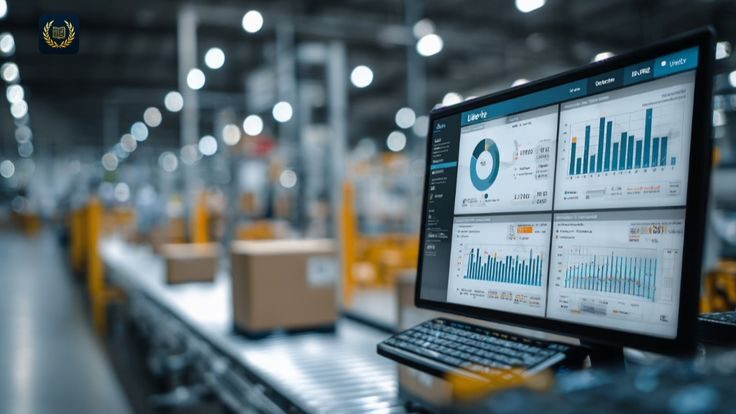
In the late 1980s and early 2000s, the company assigned me to electronic manufacturing services operations.
These factory assignments were challenging and rewarding. They were challenging because we always had to adapt to a continuing line of new products and technologies of our customers. We also had to constantly drive efficiencies because prices for these products kept falling, and we had to adjust our prices until we could no longer do so.
Customers moved production to cheaper locations like Malaysia and China. These were transnational corporations (TNC) which had the flexibility to move production lines.
It was rewarding not just for the financial benefits, but because we knew we were contributing to the lives of our large workforce. These were mostly female high school graduates.
The alternative for these ladies would have been in the service industry as servers or mall salespersons. There is nothing wrong with that, but our factory provided them with a steady job, technical training and a career path where they could become team leaders and supervisors.
It also gave them opportunities to travel abroad to train with customers before the production lines were moved to the Philippines.
Back then, our well-loved boss, Francis Ferrer, constantly reminded us of the responsibility to our workers. He ingrained in our minds that we were not just working for ourselves and our own families, but were uplifting the lives of several thousands more.
Based on statistical surveys at that time, we knew that each factory worker was supporting five family members. We were motivated by the belief that we were truly making a difference and contributing to nation-building.
Past its peak
During that period, manufacturing in the country had already passed its peak. According to research data from IBON Foundation, the peak of Philippine manufacturing as a share of the economy was in 1974 when it accounted for 29.1 percent of gross national product.
By the 1990s, the sector had decreased its share to 25.5 percent, until its historic low of 17 percent this year. In contrast, services expanded from 32 percent in the 1970s to its peak share of 56.6 in 2025, or more than half of the economy’s total output.
According to IBON, President Ferdinand Marcos Sr. planned the manufacturing sector to draw foreign direct investment (FDI). This surged from the 80s until the mid-2000s. It was mostly due to policies that relaxed foreign equity restrictions in various economic sectors.
However, capacity was limited. This was because the large accumulation of FDI in manufacturing was meant only to make the country a part of the TNC global value chain. It concentrated in the low-value added segments like assembly, testing and packaging.
We realized this predicament as a company and tried our best to move up the value chain in the 90s, setting up an integrated circuit design center and a chip production facility. We were not successful for a variety of reasons.
But since then, this factory has established a global footprint with 11 plants across five countries — embedding itself into the global supply chain, providing direct links to customers that we support.
It has reinvented itself to become more than just an electronic assembler. It now provides solutions for advanced engineering support, services to launch new products, test and systems development catering to specific product requirements, camera vision technology and aftermarket services.
The journey of this factory was not easy and has been marked by the “feast or famine” cycles that electronic manufacturers had to ride through over the decades. Yet it survived and stands strong among its remaining peers.
According to current economic data, Philippine manufacturing is facing headwinds. Some economists are saying we are stuck in underdevelopment because we allowed foreign players to take control of the country’s resources and manufacturing. They warn us that we might be headed in the same direction with the Pax Silica initiative of the United States, which is promising to revive the manufacturing sector.
This is the project in New Clark City that will build secure and resilient supply chains for semiconductors and artificial intelligence. The industrial zone will focus on semiconductor fabrication, advanced computing and critical minerals processing of copper and nickel.
President Ferdinand Marcos Jr. sees this as a generational project to shift the Philippines from exporting raw ore to manufacturing high-value tech products.
We truly hope that we have learned from our mistakes from the past, and that this new initiative will lead us out of our manufacturing hibernation.
***The views expressed herein are his own and do not necessarily reflect the opinion of his office as well as FINEX. For comments, email rsgoseco@gmail.com. Photo is from Pinterest.