

Co-author: Atty. Kiril Caral l February 27, 2026 l The Manila Times
The Philippines is entering a decisive phase in its energy transition.
As of 2025, installed power capacity stood at 30,000 megawatts (MW). The generation mix is dominated by coal at 59 percent, followed by renewables at 25.4 percent, natural gas at 14 percent, and oil at 3 percent. Within renewables, hydro accounts for 10.8 percent and geothermal 8.8 percent. Solar (3.8 percent), wind (1.0 percent) and biomass (1.1 percent) together represent only 5.9 percent of total generation (or one-tenth of coal’s share).
The Department of Energy has set ambitious targets for renewables at 35 percent of the power mix by 2030, and 50 percent by 2040.
The DOE’s 10-year Green Energy Auction (GEA) Plan will offer 25 gigawatts (GW) of renewable capacity for delivery between 2027 and 2035.
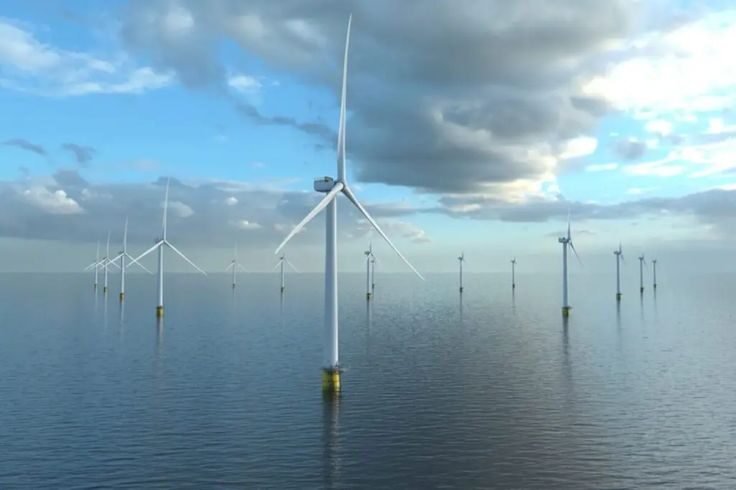
The country’s 518 MW of installed wind capacity is entirely onshore. Yet the World Bank estimates the Philippines has up to 178 GW of offshore wind potential (160 GW from floating turbines and 18 GW from fixed-bottom turbines).
This year, the DOE will award contracts under GEA-5, targeting 3,300 MW of fixed-bottom offshore wind for delivery between 2028 and 2030. It will be the Philippines’ first auction dedicated to offshore wind, and represents a crucial test of the country’s regulatory and infrastructure readiness.
For bidders, GEA-5 presents opportunities and risks:
— Port and logistics readiness. Offshore wind projects are assembled on land before installation at sea. Turbines, foundations and subsea cables require heavy-lift ports and specialized staging areas. Delays in port readiness could affect project timelines and costs.
— Transmission and grid integration. The National Grid Corp. of the Philippines’ Transmission Development Plan 2024-2050 includes backbone projects to integrate offshore wind. However, synchronization is critical. A multibillion-dollar wind farm offshore becomes stranded if interconnections are delayed.
— Regulatory complexity. Although the Energy Virtual One-Stop Shop (Evoss) aims to streamline permitting, offshore wind will require multiple approvals. Marine spatial planning and engagements with impacted stakeholders will require disciplined coordination.
— Bankability and fiscal stability. Winning bidders will enter into a 20-year Renewable Energy Payment Agreement (REPA). Lenders will closely examine payment security, tariff design, currency exposure and change-in-law protections.
— Climate and engineering risk. The Philippines lies in a typhoon corridor and is prone to seismic activity. Offshore facilities must be engineered to withstand extreme wind speeds and earthquakes.
Europe’s experience
Europe has more than two decades of experience with offshore wind power. With over 35 GW of installed capacity, led by the United Kingdom, Germany, and the Netherlands, Europe has successfully industrialized offshore wind at scale.
Projects such as Dogger Bank (3.6 GW under construction) and Ijmuiden Ver (4 GW planned) demonstrate this maturity. Long-term support mechanisms have provided price stability, attracting billions in investment despite inflation and supply chain pressures.
In developing its offshore wind industry, Europe was able to leverage its North Sea oil and gas ecosystem which has been productive since the 1970s. European banks and insurers are experienced in funding capital-intensive offshore infrastructure in the hazardous conditions of the North Sea.
Many offshore engineering firms, fabrication yards, ports, vessel fleets and skilled maritime labor pivoted into wind as the industry started to emerge. Petroleum revenues (such as in Norway) helped finance renewable expansion.
In contrast, the United States illustrates the risks of policy volatility. Despite attractive incentives under the Inflation Reduction Act, recent regulatory reversals have delayed or threatened projects. Investor confidence suffers when policy signals fluctuate. Capital intensive offshore wind, like oil and gas, requires stability measured in decades.
Presidential election
The Philippines will hold a presidential election in 2028, just as GEA-5 projects approach construction or early operation. Could policy continuity be at risk?
Renewable targets are embedded in the Philippine Energy Plan 2023-2050, and the Renewable Energy Act of 2008 provides statutory incentives. Previous GEA rounds have awarded over 20 GW without strong opposition (for now). Moreover, high electricity prices and energy security remain national priorities.
Nevertheless, investors must plan prudently. Robust dispute resolution clauses, including international arbitration, should be secured. Change of law and force majeure protections must be clear. Structuring investments to benefit from bilateral investment treaties and involving multilateral lenders can help mitigate political risk.
For policymakers assuming office on June 30, 2028, consistency and continuity will be decisive. Abrupt tariff redesigns, retroactive rule changes or transmission delays could be fatal to the nascent offshore wind sector.
The credibility and success of GEA-5 will shape not only offshore wind but the broader 25 GW renewable auction pipeline through 2035. It is a test of institutional reliability, and a measure of whether the Philippines can convert vast natural potential into durable energy security.
***The views expressed herein are their own and do not necessarily reflect the opinion of their office as well as FINEX. For comments, email msgorriceta@gorricetalaw.com. Photo is from Pinterest.