

November 20, 2025 l Manila Bulletin
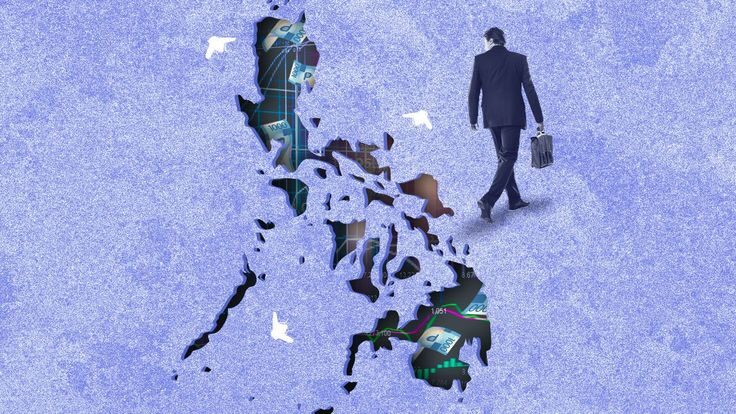
I’ve been asked a blunt question: is the Philippines teetering on the edge of an economic crisis? I’ll answer it plainly. We’re not in a full-blown crisis today, but the risk has climbed, and the flood-control scandal has made it worse by freezing public spending, damping confidence, and exposing weak controls. When government investment stalls, growth stalls. That’s exactly what happened in the third quarter, when gross domestic product (GDP) growth sank to four percent year-on-year, the slowest in more than four years, with officials and analysts pointing to delayed infrastructure disbursements amid the graft probe. Even household spending cooled. This is not an academic footnote; it’s a confidence shock that touches jobs, sales, and credit decisions.
The big picture numbers tell a mixed story. On the positive side, inflation has stayed low. Headline inflation was 1.7 percent in October 2025, below the central bank’s two- to four-percent target band, helped by easing food and transport prices. That keeps real purchasing power from eroding and gives the Bangko Sentral ng Pilipinas (BSP) room to support the economy. Markets were already talking about another rate cut in December. Low and steady prices are a cushion, not a cure.
The peso, meanwhile, has hovered near ₱59 per United States (US) dollar this November. That’s not a collapse, but it keeps imported costs sticky and reminds us that global investors are cautious. A soft currency is manageable when export orders surge; it’s a drag when foreign investment is fading and public projects are on pause.
Jobs data offer a ray of light. Unemployment was reported at 3.9 percent in August, an improvement from last year. Still, if firms cut hours or freeze hiring decisions while waiting for the scandal dust to settle, that headline rate can mask underemployment or slipping quality of work. Labor markets lag when confidence breaks.
On growth, the loss of momentum is clear. After a decent start to 2025, the economy slowed sharply by the third quarter as the scandal dented public spending and household demand. Natural disasters added stress. The government’s full-year target now looks out of reach, and that matters for revenue, debt dynamics, and future budgets. Weak growth with low inflation isn’t the worst mix, but it becomes dangerous if investment dries up and the state cannot execute plans.
Let’s talk capital. Foreign direct investment (FDI) has been sliding. BSP data show net FDI inflows dropping year-on-year in mid-2025 and again in August. Money follows trust. Governance headlines push investors to the sidelines, especially when contracts and payments are under review. If that hesitation turns into a sustained retreat, it will slow factory builds, business process outsourcing (BPO) expansions, and energy projects.
Industry signals sit on the fence. The Philippines’ manufacturing purchasing managers’ index (PMI) ticked just above 50 in October, hinting at flat conditions rather than a clear rebound. That’s consistent with a wait-and-see economy where firms run lean, keep inventories tight, and delay capital expenditures (capex) until policy noise fades. It’s not contraction, but it isn’t the surge we need.
Public finance is the other pressure point. The government’s 2025 deficit is now projected at around 5.5 percent of GDP, higher than previously planned, while outstanding debt has climbed. None of that is catastrophic by itself; many economies run larger deficits. The problem is timing: higher borrowing meets weaker growth just when confidence is shaky. That combination narrows room for fiscal support and raises the premium on clean, timely, and targeted spending.
So, are we on the verge? I’d say we’re standing at a fork. One path is a contained slowdown followed by a modest upturn once investigations progress, procurement resumes, and rates ease a bit. The other is a slide into a confidence-driven funk—credit spreads widen, investment plans are shelved, and households pull back further. The difference between those paths isn’t fate; it’s policy and execution. Clear accountability on the flood-control mess, credible timelines to restart vetted projects, and transparent reporting can unlock stalled spending and rebuild trust.
If I were running a business, I wouldn’t freeze. I’d get surgical. First, I would run stress tests on cash flows at exchange rates from ₱58 to ₱61:$1 and policy rates a notch lower than today, since cuts are on the table. That gives me a view of headroom before covenants squeak. I would also revisit pricing for imported inputs and negotiate quarterly rather than annual terms while the peso is fragile. Doing nothing is riskier than moving early.
Next, I’d shift capital spending to fast-payback items: energy savings, productivity software, and small automation that reduces rework. Projects that prove return on investment (ROI) in 12 to 18 months can ride out foggy conditions. I would keep hiring selective, focusing on roles that improve margin per employee. Where demand is steady—exports on weaker peso, local essentials—I’d lean in. Where demand is discretionary, I’d pilot offers instead of rolling nationwide. Small bets beat big gambles when visibility is poor.
On financing, I’d diversify. Lock in lines with at least two banks and explore supplier credit to smooth working capital. If the firm has a clean balance sheet, I’d consider issuing commercial paper at modest size to avoid tapping banks for every peak. The key is optionality. You don’t want a single point of failure if credit tightens.
Supply chain deserves attention. Map tier-one and tier-two suppliers and identify any that rely on delayed public contracts. If a partner’s receivables are stuck because of the probe, your delivery schedule is at risk. Add a secondary supplier where feasible and keep safety stocks for critical components without blowing up cash. It’s cheaper than missing orders.
Reputation also matters during scandals. I would put compliance and procurement hygiene front and center. Publish vendor policies, disclose conflicts, and audit high-risk spend. That keeps you off headline pages and reassures customers and lenders that your house is in order. In uncertain climates, clean governance is a sales asset.
Finally, I’d prepare for a restart. Scandals end. Budgets get unblocked. When that happens, the winners will be the firms that kept their sales pipelines warm with government and large buyers, pre-qualified for tenders, and lined up inventory and crews. Use the lull to train teams, upgrade proposals, and fix processes that slow you down when orders return.
No, we’re not collapsing. But we’re closer to the edge than we should be, and the way back is trust built through action: swift accountability on the flood fiasco, transparent project reviews, and disciplined execution of a realistic fiscal plan. As businesses, we can’t wait for the perfect macro backdrop. We manage what we can control, watch the indicators, and stay ready to move the moment the fog lifts.
***The views expressed herein are his own and do not necessarily reflect the opinion of his office as well as FINEX. For comments, email rey.lugtu@hungryworkhorse.com. Photo is from Pinterest.