
June 12, 2026 l BusinessWorld
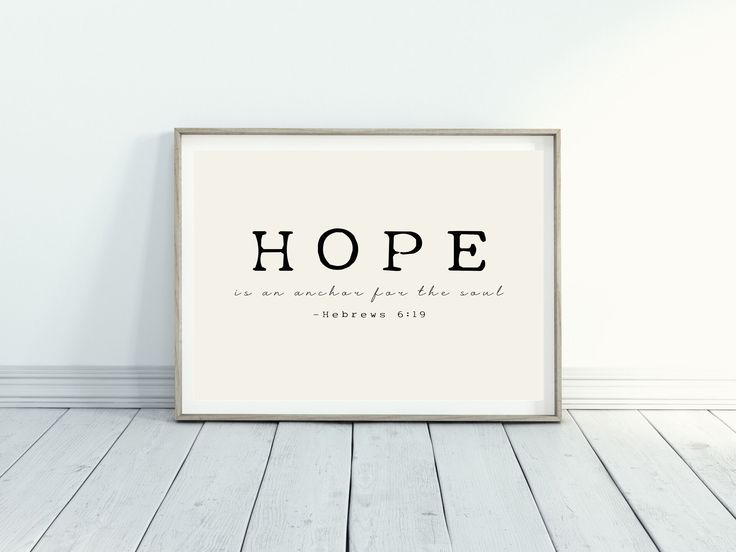
If one were to judge solely from the headlines, it would be easy to conclude that the Philippines is in a difficult place today.
Inflation continues to erode purchasing power. Political controversies dominate public discourse. The nation remains absorbed in debates surrounding the Senate, the impeachment process, and the anomalies in flood control projects. Businesses are becoming more cautious. Investors are delaying decisions. Consumer confidence appears fragile.
There is no shortage of reasons for concern.
Yet amid the noise and uncertainty, it is worth recalling a truth that is both simple and profound: nothing is permanent.
History teaches us that both prosperity and adversity are temporary. Economies expand and contract. Political crises emerge and eventually pass. Institutions stumble, adapt, and reform. Even the most difficult chapters in a nation’s history eventually give way to a new chapter. The challenge before us is not to ignore today’s problems but to resist the temptation to believe that they will define our future.
The Greek philosopher Heraclitus famously observed that one cannot step into the same river twice because the river is constantly changing. The same principle applies to nations. Conditions evolve. Circumstances shift. Leaders come and go. Policies change. What appears permanent today often looks remarkably temporary when viewed through the lens of history.
Unfortunately, prolonged uncertainty has a way of eroding hope. When people are repeatedly exposed to bad news, they begin to assume that decline is inevitable. Cynicism becomes fashionable. Skepticism hardens into resignation.
This is dangerous because confidence itself is an important national asset.
Business leaders understand this well. Investment decisions are based not only on current conditions but also on expectations of the future. Entrepreneurs expand because they believe tomorrow will be better than today. Consumers spend because they anticipate opportunities ahead. A society that loses confidence gradually loses momentum.
Interestingly, optimism is not merely a psychological preference; it has measurable benefits. Numerous studies have shown that optimistic individuals tend to enjoy better health outcomes, including lower risks of cardiovascular disease. Researchers suggest that optimists are generally more resilient, manage stress better, and are more likely to take constructive action when confronted by challenges.
The difference often lies in how setbacks are interpreted.
Optimists regard reverses as challenges to overcome or lessons to learn from. Pessimists, on the other hand, are more likely to see setbacks as permanent verdicts on their own enduring weaknesses.
This distinction matters not only for individuals but also for nations.
A country that views its problems as permanent eventually stops trying to solve them. Citizens disengage. Businesses retreat. Talented people become indifferent. Progress slows not because solutions are unavailable but because belief in improvement has disappeared.
Yet optimism must never be confused with complacency. Hope alone is not enough. A positive mindset should inspire action, not passivity.
If we are serious about helping the Philippines emerge from its current challenges, we must begin by recognizing our own responsibilities as citizens. National renewal does not start in Congress, the courts, or executive offices. It starts with the people.
Perhaps nowhere is this more evident than in the exercise of the right to vote.
The quality of governance ultimately reflects the quality of choices made by voters. If we desire better public institutions, stronger accountability, and more competent leadership, we must become more conscientious in selecting those who lead us. Democracy is the responsibility to make informed choices.
This responsibility has become more difficult in the age of social media.
The digital revolution has democratized access to information, but it has also democratized misinformation. Troll networks, fake news, manipulated content, and distorted narratives have become powerful tools in shaping public opinion. Emotional appeals often travel faster than facts. Repetition is frequently mistaken for truth.
The danger is not merely that falsehoods exist. The greater danger is that citizens make important decisions based upon them.
As voters, we must become more diligent and discerning. We must verify information before sharing it. We must seek facts rather than slogans. We must distinguish between evidence and propaganda, between authentic public service and carefully crafted political branding. We must evaluate leaders based on competence, integrity, character, and performance rather than celebrity, popularity, or online influence.
The Buddhist concept of impermanence reminds us that all conditions, whether good or bad, eventually change. Suffering often arises when we cling too tightly to what we wish to preserve or resist too strongly what we wish to avoid. The wiser response is neither despair nor denial, but constructive engagement.
The Philippines undoubtedly faces serious challenges. But these challenges are not destiny. They are problems awaiting solutions.
History has shown that nations recover, institutions reform, and economies rebound. The question is whether we possess the courage to remain hopeful and the discipline to act responsibly.
For optimism is not the belief that everything will somehow work out on its own. It is the conviction that our actions matter and that, together, we still have the power to change the course of our nation’s story. In difficult times, that may be the most important belief of all.
***The views expressed herein are his own and do not necessarily reflect the opinion of his office as well as FINEX. For comments, email benel_dba@yahoo.com. Photo is from Pinterest.