

July 15, 2026 l Business Mirror
Growing up, I always considered our family to belong to the working class: we were neither poor nor wealthy. For me, rich people were those who owned vast tracts of land or operated large business empires. Like many Filipinos, I never imagined that one day I would hear the Philippines being described as an upper-middle-income country.
With the country’s recent upgrade, many of us have become curious about what “upper middle income” really means. We often hear the term in discussions, but its meaning is not always clear.
According to a 2026 study by the Philippine Institute for Development Studies (PIDS), for a family of five, the middle-income group is divided into three categories: the lower middle class, with a monthly family income of about P40,000 to P80,000; the middle-middle class, earning around P80,000 to P130,000; and the upper-middle class, with incomes ranging from P130,000 to P200,000. Beyond these are the upper income families but not rich households, followed by those considered rich whose incomes exceed the highest threshold established in the study.
On the international front, the World Bank recently upgraded the Philippines to upper-middle-income economy status. The World Bank classifies economies in this category as those with a gross national income (GNI) per capita ranging from $4,636 to $14,375. The Philippines crossed this threshold after posting a GNI per capita of approximately $4,850, placing the country at the lower end of the upper-middle-income bracket.
How did the Philippines achieve this milestone?
According to the World Bank, the country’s progress was largely driven by sustained economic growth that generated millions of jobs despite the challenges brought about by the Covid-19 pandemic, elevated global commodity prices, high interest rates and poverty incidence continued to decline—from 16.7 percent in 2018 to 15.5 percent in 2023. Since 2010, the Philippines has emerged as one of the more dynamic economies in the East Asia and Pacific region.
The country’s economic expansion created approximately 11.7 million new jobs, with employment growth outpacing the increase in the labor force. This strengthened household incomes, stimulated consumer spending, and improved the lives of many vulnerable families, aided by overseas remittances and favorable labor market conditions.
But where did this growth come from?
Much of it was fueled by the services sector—particularly business process outsourcing (BPO), wholesale and retail trade, tourism, and other service-oriented industries. For those of us working in the services sector, this presents tremendous opportunities. It reminds us of the importance of continuously upgrading our skills so we can meet the growing demands of both local and global markets.
What struck me most was that while public attention was focused on political controversies, allegations of corruption, and other socio-economic issues, the country’s economy was quietly making significant progress. One day, we simply woke up to the news that the Philippines had achieved upper-middle-income status.
Our rapidly expanding services sector was silently strengthening the economy while political noise dominated the headlines. Imagine how much further we could progress if governance continued to improve, corruption was effectively addressed, public officials exercised greater statesmanship, and every Filipino contributed positively instead of merely complaining.
The Philippines has many strengths working in its favor: a young and growing population; increasing urbanization; resilient consumer demand; and, a globally-competitive services sector. These are powerful foundations for sustained economic growth. With the right policies and collective effort, it is not unrealistic to hope that more Filipinos will move from poverty into the middle class in the years ahead.
Still, we must not lose sight of reality.
A PIDS study shows that the upper-middle-income group represents only a small fraction of Filipino households. The overwhelming majority still belongs to the poor, low-income, and lower-middle-income sectors. While the country’s upgrade is certainly a milestone worth celebrating, it does not mean that prosperity has already reached every Filipino family.
Like any economic development, the country’s new status brings both opportunities and challenges. For now, however, we should focus on maximizing its benefits. More importantly, we must ensure that economic progress becomes more inclusive so that growth is not enjoyed by only a few but shared by the greater majority of Filipinos.
After all, the true measure of national progress is not simply achieving a higher international classification but improving the quality of life of every Filipino.
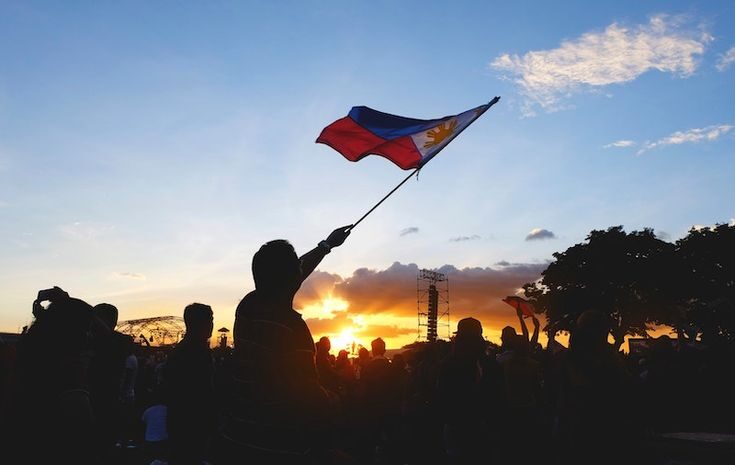
***The views expressed herein are her own and do not necessarily reflect the opinion of her office as well as FINEX. For comments, email wimiranda@inventormiranda.com. Photo is from Pinterest.