

June 18, 2026 l Manila Bulletin
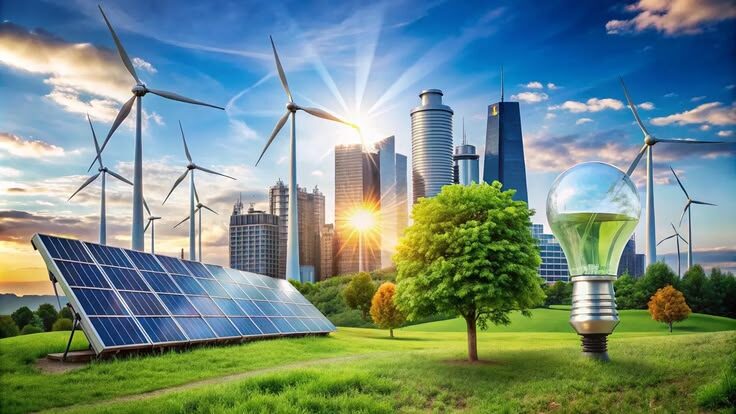
Recently, the PNB Board and Senior Management, led by Chairman Ed Cua and President Edwin Bautista, attended an energy briefing conducted by Department of Energy (DOE) Undersecretary Rowena Cristina Guevara. She certainly impressed the PNB Board and inspired confidence as a public official. She holds a PhD in Electrical Engineering from the University of Michigan, a doctorate in Ethnomusicology from UP, and was the first woman dean of the UP College of Engineering. It is a rare combination of technical excellence, eloquent delivery, and a versatile intellect. Tax icon and PNB Director Willy Sanchez aptly remarked, “She is so energetic about energy!”
During the briefing, Usec. Guevara shared that while the Philippines has achieved a household electrification rate of 95.8 percent, two million households still lack electricity. The Philippine energy sector represents a ₱3.3 trillion industry. As of December 2025, the sector comprised 251 generation companies running 616 generation facilities, 487 WESM participants, 142 distribution utilities, 153 retail electricity suppliers, and a sole transmission concessionaire managing 21,027 circuit kilometers of transmission lines.
The Philippine energy landscape as of December 2025 shows that coal still accounts for the highest share, with an installed capacity of 40.6 percent (13,006 MW). Renewable energy stands at 32.9 percent (10,500 MW), followed by natural gas at 15.8 percent and oil-based sources at 10.8 percent. Within the renewables sector, hydro leads at 12 percent of total installed capacity, followed closely by solar at 11.1 percent, geothermal at 8.4 percent, biomass at 1.8 percent, and wind at 1.6 percent.
To meet future energy demand and achieve long-term energy transition goals, Usec. Guevara noted that the country will require between ₱28 trillion and ₱31 trillion in investments through 2050. This massive funding requirement presents an excellent opportunity for financial institutions to participate in nation-building while generating sustainable returns. However, energy financing comes with distinct risks.
First, there is supply chain exposure, as the Philippines relies heavily on imported solar panels, wind turbines, inverters, battery storage systems, and electrical components, meaning global disruptions can increase project costs and delay completion.
Second, foreign exchange risk is a factor, since energy projects incur capital expenditures denominated in foreign currency while revenues are in pesos; currency depreciation increases debt servicing requirements and pressures cash flows.
Third are construction and execution risks, where delays in permitting, right-of-way acquisition, grid connection, regulatory approvals, and equipment delivery can postpone commercial operations. Fourth, climate change and force majeure events like typhoons, earthquakes, floods, pandemics, political disturbances, and transmission constraints can further affect timelines and financial performance.
Finally, developer quality and project viability pose a challenge. Usec. Guevara highlighted the presence of so-called “RE flippers”—entities that acquire permits and project rights primarily for resale rather than development. While these activities help create project pipelines, they also contribute to delays, speculative behavior, and higher risks of non-completion.
Some safeguards to mitigate these concerns include fixed-price Engineering, Procurement, and Construction (EPC) contracts, performance guarantees, debt service reserve accounts, milestone-based loan disbursements, and foreign exchange hedging strategies. Continuous monitoring of construction progress, cost overruns, offtake agreements, and market conditions will further help reduce these risks.
According to the Bloomberg 2025 Climate Scope Report, the Philippines ranked as the fourth (4th) most attractive emerging market globally in the power sector, trailing only India, Romania, and Chile. Usec. Guevara stated that as of December 2025, there were 1,365 active Renewable Energy contracts representing 130.8 GW in potential capacity.
At the recent Nickel Asia Corporation (NAC) stockholders’ meeting, President Martin ”Dennis” Zamora reported that the company’s transition into a diversified energy player is accelerating through its renewable energy subsidiary, Emerging Power Inc. (EPI). Their joint venture with Shell in Leyte will add 120 MW in capacity, with commercial operations targeted for the third quarter of 2026. Meanwhile, their project pipelines in Subic, Zambales, and Bataan remain robust.
Renewable energy is securely positioned to become one of the country’s most critical growth sectors. At a recent WomenBiz meeting headed by Chairman Rhoda Caliwara and President Rosemarie Bosch Ong, BDO Capital President Ed Francisco was asked where people should look to invest. His immediate answer was “renewable energy,” before adding, “mining, logistics, cold storage, and refrigeration facilities.”
The renewable energy transition is a strategic way to strengthen energy security, promote environmental sustainability, and advance economic growth.
***The views expressed herein are her own and do not necessarily reflect the opinion of her office as well as FINEX. For comments, email ftarriela@yahoo.com. Photo is from Pinterest.