

February 18, 2026 l Business Mirror
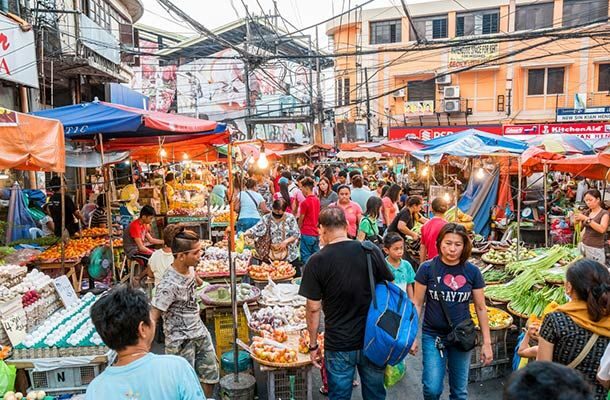
Of late, much has been said on the economic development of the country. It is very concerning and what comes to mind is: Does the published report take into account the informal sector?
A quick technology-assisted search provided the following highlights for sharing.
The informal sector (or informal economy) refers to independent, self-employed, small-scale producers and distributors of goods and services. It is often described as the “missing middle”—workers who are neither among the poorest receiving government subsidies nor part of the formal workforce with standard employee benefits.
Among those that can be identified are food street vendors, ambulant vendors selling packed food to offices, sari-sari stores, tricycle/pedicab/motorcycle drivers, condo/home cleaners, sewers, some professionals like doctors, accountants, lawyers practicing on their own, independent carpenters/plumbers/mechanics and more. They are reliant on their “suki” and referred customers. They conduct “business” from their residences or “offices” or on the streets while cars line up due to traffic. They are usually not registered with the local government/regulators and do not have business permits. Most do not render any tax returns nor pay taxes. A few may be “compliant” on very limited scope.
Key statistics and scope (AI generated)
- Workforce share: As of early 2025, estimates suggest approximately 20.6 million Filipinos (roughly 42 percent of the total employed population) work in the informal sector.
- Economic contribution: The informal economy is estimated to account for roughly 28 percent to 34 percent of the Philippines’ GDP.
- Core demographics: Informal workers are often concentrated in Calabarzon and Central Luzon. A significant portion (approx. 41-44 percent) works in agriculture, hunting, and forestry, followed by wholesale/retail trade and transport.
Perhaps, one may venture to add the business of “graft and corruption”. The statistics on this and the impact on the economy can be anyone’s guess and distress.
While economic analysts, experts and leaders may have considered various economic models and analysis to come up with economic reports, a number of our countrymen may have already offered arguments that are replete with ‘motherhood statements’, yet they may not be in the know of the reality on the ground. Worse, what they are suspecting may just be the ‘tip of the iceberg’.
The foregoing is meant to make the readers ask questions and be in touch with what is in our midst. Katotohanan lang po!
***The views expressed herein are her own and do not necessarily reflect the opinion of her office as well as FINEX. For comments, email clmanabat@gmail.com. Photo is from Pinterest.