

February 13, 2026 l The Manila Times
When a country’s gross domestic product (GDP) growth slows while public debt increases, it faces a combination of economic, fiscal and social challenges.
In the Philippines, this pressure became more evident in 2025, when economic momentum significantly weakened: GDP slowed to 4.4 percent for the full year, with fourth-quarter growth at 3.0 percent.
At the same time, the national government’s outstanding debt jumped to P17.71 trillion as of December 2025, up by P1.66 trillion from 2024.
This is a problem, not because the numbers are “bad,” but because it limits flexibility and can slowly undermine long-term growth potential for the country.
In simple terms, the government is borrowing more while earning less to cover the debt. While it has the fiscal and monetary position to borrow, the debt must be used in projects that create long-term economic benefits. This is where governance is linked to economic performance.
Political dynasties also affect structural economic issues. Department of Economy, Planning and Development Secretary Arsenio Balisacan said regions dominated by established political clans generally experience weaker local economies, subpar public services and reduced investment.
This hampers growth since local governments handle funds for infrastructure, business permits, land use, education and basic services. When leadership turnover is limited and public office becomes a de facto family business, the incentives to innovate, attract investors and improve public sector performance decline.
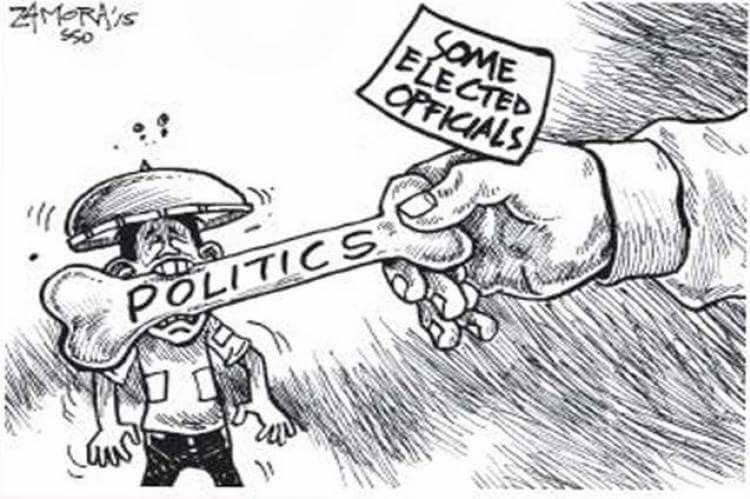
Political dynasties reflect a deeper governance failure. They concentrate power, suppress competition and weaken accountability, creating conditions where influence, succession and control are managed within family networks, rather than through open political and administrative competition.
This contradicts United Nations Sustainable Development Goal 16, which calls for countries to build effective, accountable and inclusive institutions for sustainable and inclusive growth.
For the business community and investors, this means real economic risk. Concentrated political power raises concerns about regulatory independence and equal access to public opportunities.
These risks are eventually priced into investment decisions. Higher perceived governance risk leads to higher required returns, weaker confidence in local markets and lower investor participation, precisely the opposite of what the country needs as it works to revive growth momentum and manage a rising public debt burden.
Although the 1987 Constitution mandates the prohibition of political dynasties “as may be defined by law,” Congress has yet to pass an enabling anti-dynasty law. The challenge is not just to enact a law in name, but to ensure it truly disrupts how political monopolies operate in reality.
Succession, substitution, coordinated rotation of offices and position switching are the actual methods dynasties use to maintain control. A weak or overly limited law risks only creating the illusion of reform while leaving powerful structures untouched.
The twin issues of sluggish growth and rising public debt require stronger institutions and more effective policy implementation. Merely enhancing fiscal discipline and boosting investment will fall short if governance flaws persist and hinder local economic performance.
Political dynasties, which kill competition and accountability in public offices, undermine the country’s capacity to achieve inclusive growth.
Ultimately, restoring economic momentum requires addressing not only macroeconomic and fiscal challenges but also governance systems that influence how public power is exercised. Enhancing the quality of political competition through the passage of an effective anti-political dynasty bill is an essential economic step for the country to fully realize its long-term growth potential.
***The views expressed herein are his own and do not necessarily reflect the opinion of his office as well as FINEX. For comments, email eaquahiansen@phinma.com.ph. Photo is from Pinterest.