
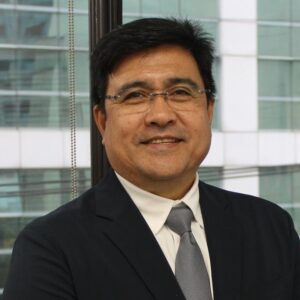
December 2, 2025 l Manila Bulletin

Nov. 23 was a red-letter day for my family. Four days before his birthday, my son, Carl Lorenz Cervantes, launched his book, Sikodiwa: Revisiting Filipino Indigenous Wisdom for Personal and Shared Well-Being, published by North Atlantic Books.
It is a proud moment for a parent, naturally. But as I read through his exploration of our ancestral worldviews—concepts of Kapwa (shared identity) and the profound meaning behind the proverb “Ang hindi marunong lumingon sa pinanggalingan ay hindi makararating sa pinaroroonan” (Those who do not honor their roots will never reach their destination)—I found myself reflecting on my own timeline. Carl writes about the necessity of looking back to understand where we are going. By happy coincidence, life recently offered me a chance to do exactly that.
Just a few days ago, I flew to Davao City for a reunion. It was a gathering of former employees of the Northern Mindanao Development Bank (NMDB). Walking into that room was like stepping into a time capsule, instantly transporting me back to 1990.
That year, 1990, marked my first foray into the banking world. I was a young, eager Account Officer, cutting my teeth on credit proposals, client calls, and the rigorous discipline of development finance. We were a tight-knit group then, navigating the economic landscape of Mindanao, fueled by coffee and the idealism of youth.
At the reunion, the years melted away. We were no longer the senior executives or retirees we are today; we were once again the young officers in the trenches. We laughed over old stories—the difficult accounts, the shared struggles of balancing ledgers and lives. There is a unique bond formed in the fire of one’s first job. These were the people who saw me before I had a title, before I had a lengthy CV, and significantly, before I became a father to the author who recently launched his book.
The timeline struck me with poignant clarity. I started at NMDB in 1990. Four years later, in 1994, Carl was born.
In those early years, my world was defined by numbers—interest rates, amortization schedules, and IRR. I was building a career, arguably to give my growing family “wings.” I wanted to ensure they could fly, that they would have opportunities I worked hard to secure.
Thirty-five years later, that child born in the midst of my banking career has written a book not about interest rates, but about roots.
Sikodiwa challenges us to decolonize our minds and reconnect with a Filipino psychology that values the collective over the individual, and spiritual well-being over material accumulation. There is a beautiful irony here. In 1990, as an Account Officer, I was trained to look at the “bottom line.” In 2025, my son is teaching me, and his readers, to look at the “root line.”
His book argues that we cannot be fully whole until we acknowledge the indigenous wisdom that flows through our veins. It made me realize that my reunion in Davao was not just a social event; it was an act of Sikodiwa in itself. It was a return to my professional roots. Acknowledging where I came from—that provincial development bank, those mentors, those peers—is essential to understanding the financial executive I am today.
In the corporate world, we often speak of “legacy” in terms of succession planning or asset management. But there is a deeper legacy at play. It is the transmission of values. The hard work and integrity I learned at NMDB in 1990 did not just stay in the office; they traveled home. They became part of the atmosphere in which Carl grew up. Perhaps, in some way, the stability provided by that career allowed him the freedom to explore the esoteric and deep cultural questions he answers in his book.
As financial executives, we are often focused on the future—forecasts, projections, and next year’s budget. But on this specific Tuesday, I am embracing the lesson of Sikodiwa. I am celebrating the launch of my son’s work, which invites us to honor our past. And I am celebrating the enduring friendships from Davao that remind me of who I was when I started.
To my former colleagues from NMDB: thank you for being part of my “pinanggalingan” (origins). And to my son, Carl: congratulations. You have given your father a new lens through which to view his own journey. It turns out that to truly fly, we must first recognize the ground that held us.
Sikodiwa is available in our local bookstore and in digital copy. I invite my colleagues in the business community to read it. You might find that the indigenous wisdom of our ancestors has a lot to teach us about leading with empathy, authenticity, and a true sense of Kapwa in the modern boardroom.
***The views expressed herein are his own and do not necessarily reflect the opinion of his office as well as FINEX. For comments, email carlos.cervantes@powersource.group. Photo is from Pinterest.