

November 28, 2025 l The Manila Times
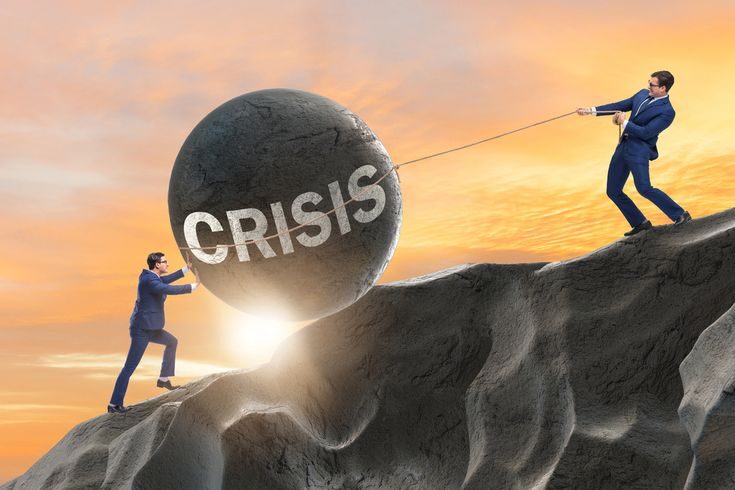
“Crises do not build character — they reveal it.” — James Lane Allen
The Philippines faces a difficult moment.
Revelations of large-scale graft and corruption at the highest levels of government have shaken public trust. Investor confidence has lessened, and global tensions — from supply chain reshaping to regional security risks — cast an uncertain shadow over the near-term outlook.
Many fear the economic horizon is narrowing.
Yet beneath the national unease lies a powerful counternarrative. Well-governed institutions are still thriving, even as the country wades through political and geopolitical turbulence.
Several Philippine financial institutions, in particular, have posted robust balance sheets, increasing deposits, and expanding customer networks.
One mid-sized bank (let’s keep it anonymous) is an example. It has grown its deposit base, strengthened digital channels, and maintained an enviably low cost-to-income ratio. Its performance shows that success is possible even when governance failures dominate the headlines.
This is not an isolated phenomenon. History consistently shows that some organizations perform better during crises than in stable times.
During the Asian financial crisis in the 1990s, an Asian Development Bank study found that banks with strong governance and conservative leverage recovered 30 to 40 percent faster than their peers. South Korea’s Shinhan Bank and Thailand’s Kasikornbank became industry leaders when they restructured early and invested in digital processes before others dared.
In the 2008 global financial crisis, management consulting firm McKinsey identified a group of companies, later dubbed the “resilients,” which delivered 20 percent more shareholder returns within five years by maintaining efficiency, reallocating resources swiftly, and avoiding panic-driven decisions.
During the Covid-19 pandemic, the Organization for Economic Cooperation and Development reported digital-first banks, e-commerce platforms, and logistics companies recovered twice as fast as traditional players. Preparedness, not luck, determined outcomes.
A simple truth emerges: Crises separate the disciplined from the vulnerable.
The high-performing Philippine bank’s traits provide guidance for other firms navigating today’s stormy economic environment.
Efficiency as a strategic weapon
Efficiency is not cost-cutting, it is strategic clarity. Institutions that keep lean operations during stable periods can invest aggressively during downturns. They retain flexibility while competitors drown in bloated structures. McKinsey’s resilience study concludes: “Efficient operators outperform across all economic cycles.”
Agility and real-time sensing of opportunities
Success during uncertainty requires ears on the ground — the ability to detect what customers need today. The thriving bank focused on micro-segments: underserved depositors, micro-merchants, digitally oriented savers.
Harvard Business Review (2020) found that companies with strong customer-sensing capabilities were 2.5 times more likely to grow during downturns. Agility, not size, determines momentum.
Integrity and governance as market advantages
At a time when the national conversation is clouded by graft, organizations with strong governance stand out. Firms with robust audit systems, clear accountability, and transparent leadership inspire confidence — not only from regulators and customers but from employees and partners.
Integrity is not simply ethical. It is a competitive moat.
Early digital investment
Winners invest before others see the need. Long before digital banking became standard, this institution upgraded backroom systems, offered seamless mobile onboarding, and strengthened cybersecurity. When crisis came, these platforms transformed into growth engines.
Strong capital and risk discipline
Firms with capital buffers and conservative lending practices survive shocks and gain market share as weaker players retreat. Preparedness provides resilience; resilience attracts opportunity.
Leadership continuity and culture
Crisis-proof entities often have long-tenured leadership teams with shared values. They avoid intramural politics, stay focused on mission, and execute consistently. While national leadership swings with political winds, strong institutions remain steady.
Achievable success
With corruption scandals dominating headlines and global uncertainty rising, it is natural for entrepreneurs, small and medium enterprises, and professionals to feel discouraged. But the evidence — local and global — is clear: Success is achievable even in difficult environments. Crises often create the best conditions for new entrants and agile firms.
Here are three important considerations:
Progress does not require perfect conditions. Some of the world’s most remarkable companies — Disney, Airbnb, Uber, Zoom — were born in recessions or crises. Constraints often sharpen strategy and spark creativity.
Build internal systems that outlast political cycles. The national environment may be unstable, but firm-level governance can neutralize external chaos. Institutions rise on the strength of their discipline, not the predictability of their governments.
Integrity is a long-term asset. At a time when national leadership is under scrutiny, firms that operate honestly, transparently, and ethically win trust. Over time, trust becomes market share.
The Philippines is navigating turbulence, but this need not paralyze the private sector. Agile, ethical, well-run institutions — like the high-performing bank mentioned earlier — will continue to rise above the noise. Their success is proof that the country still has pockets of excellence capable of driving long-term growth.
***The views expressed herein are his own and do not necessarily reflect the opinion of his office as well as FINEX. For comments, email benel_dba@yahoo.com. Photo is from Pinterest.