

August 22, 2025 l Manila Times
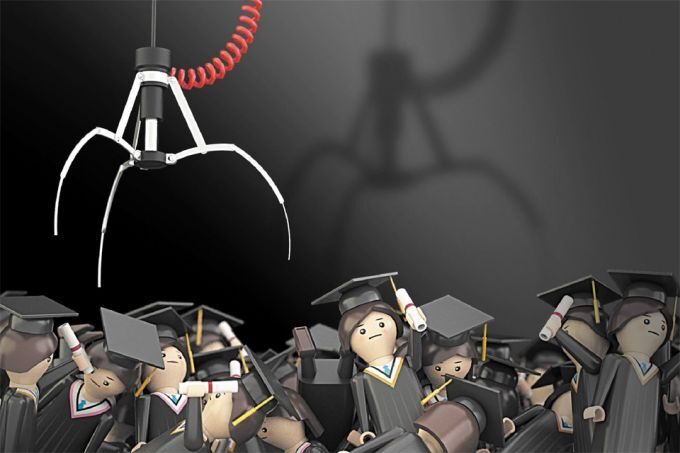
There is an alarming development in the country’s job market — where people with higher education are more prone to unemployment.
For the longest time, a college degree was seen as a guarantee for a job and economic security. This is no longer the case — as discussed at the recent Unilab Education (UniEd) launch by former National Economic and Development Authority Secretary Cielito Habito.
In his message, he discussed job-skills mismatch, saying today’s college graduates comprise the largest segment of the unemployed by educational level.
This is a shift from earlier patterns, when most of the unemployed were high school graduates.
The panel of reactors — Education Secretary Sonny Angara, Commission on Higher Education (CHED) Chairman Shirley Agripas and Technical Education and Skills Development Authority (Tesda) Secretary Kiko Benitez — acknowledged the situation and presented a strategy road map that would correct the mismatch.
Tesda talked about initiatives in providing industry-relevant technical training.
Data from CHED and the Department of Labor showed a 3.6-percentage-point rise in college graduate unemployment in June 2025 compared to December 2024.
This coincided with the summer graduations. Clearly, many graduates struggle to find jobs that match their qualifications, while industries face shortages in skilled workers.
The discrepancy has been developing for some time. As early as 2019, studies noted that many graduates failed to meet employers’ expectations in critical thinking, initiative, effective communication and relevant experience.
A December 2023 Social Weather Stations survey found that adult joblessness was highest among college graduates (22.1 percent), higher than among junior high school (20.8 percent), elementary (20.3 percent), or even those who did not complete primary school (8.7 percent).
Habito pointed out the causes. One reason is the herd mentality toward popular courses. For example, a 2023 survey by the Philippine Institute for Development Studies predicted an oversupply of information technology graduates by 2025 (exceeding demand by 171,960 positions).
At the same time, there will still be shortages in other Science, Technology, Engineering and Mathematics fields including life and physical sciences, engineering and mathematics.
Habito also mentioned the weak foundations and inadequate learning of students. He cited findings presented by the Second Congressional Commission on Education (EdCom 2) that highlighted systemic issues, including foundational learning defects, high teacher misalignment (62 percent of high school teachers teaching outside their subject expertise).
These structural flaws resulted in graduates lacking critical competencies despite earning a degree. The emphasis on prestige and credentials has also overshadowed practical skills development, resulting in unmet employers’ requirements.
At UniEd, several recommendations were made. CHED called for prioritizing innovation and equity to make education a guarantee for sustainable employment.
Programs like ladderized education that combine vocational certifications with college degrees offer a promising model. Some schools have started integrating programs that combine Tesda certifications like welding with the engineering curriculum.
Other industry-academe partnerships are needed to align academic programs with current industry needs. Better collaboration is essential in co-developing curricula and facilitating internships to enhance employability.
Paradox
The paradox is clear. Although the country is producing more graduates, graduate unemployment is going up.
This is apparently not just a Philippine phenomenon. The unemployment rate for recent college graduates in the United States is also higher than its overall national average.
New analyses from Goldman Sachs reveal that recent college graduates no longer have the traditional edge over their nondegree peers. This is apparently happening for a different reason other than the job-skills mismatch.
According to Oxford Economics, this is partly due to structural shifts in the tech sector and the impact of artificial intelligence (AI) on entry-level positions.
There is evidence in developed economies that AI is displacing entry-level positions that recent graduates might have previously filled.
In a recent interview, Open AI CEO Sam Altman acknowledged this nagging suspicion that AI will replace certain job categories, particularly entry-level jobs. Altman, however, mentioned AI’s potential to create entirely new opportunities.
We face real threats, as well as opportunities, that would determine the country’s progress. Aside from skills mismatch, we are also dealing with an evolving technology threat that would change the future of work.
Countries like the US are experiencing it, and this thing will surely reach the Philippines. The immediate task is to bridge the gap between the skills imparted by college and the evolving needs of industry.
There is likewise a need to prepare students for new technologies that are slowly taking over entire industries. This can only be solved if the government, education and business work together in promoting the necessary skills alongside academic degrees.
Moreover, learning foundations, starting from primary schools, must be uplifted. We need this national transformation to fulfil the promise of higher education for better jobs.
***The views expressed herein are his own and do not necessarily reflect the opinion of his office as well as FINEX. For comments, email rsgoseco@gmail.com. Photo is from Pinterest.