

August 19, 2025 l Manila Bulletin
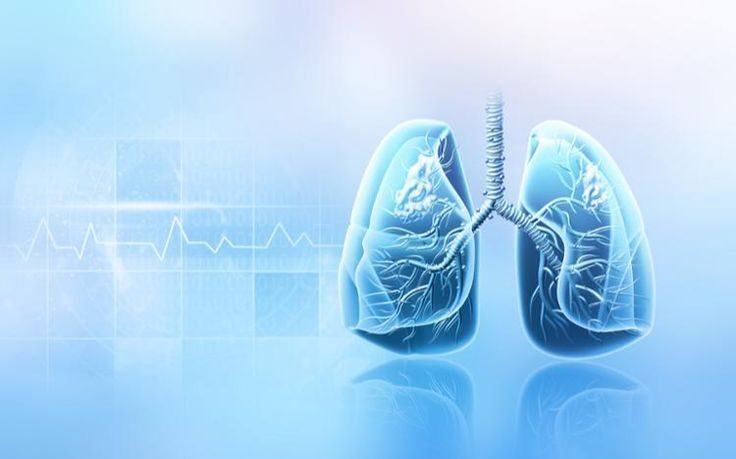
On July 29, 1910, the Philippine Tuberculosis Society (PTSI) was founded to confront a disease that, at the time, claimed tens of thousands of Filipino lives each year. In 1934, President Manuel Quezon secured funding for TB control through the Sweepstakes Law, which earmarked a share of its revenues for the cause. This paved the way for the Quezon Institute (QI), which for decades stood as the country’s premier TB referral hospital.
PTSI’s history is one of innovation. In 1987, it pioneered the Directly Observed Treatment Short-Course (DOTS) strategy in the Philippines to ensure patients completed their full medication regimen. During the Covid-19 pandemic, QI adapted once more, becoming Quezon City’s first isolation facility for mild and asymptomatic cases.
Two years ago, QI closed as a hospital—not due to defeat, but as part of a strategic shift toward community-based TB care. This transition has allowed PTSI to take the fight directly to the barangays, fields, and islands where TB remains most entrenched.
The scale of the problem
The WHO’s Global Tuberculosis Report 2024 paints a grim picture: the Philippines has 643 TB cases per 100,000 people, nearly five times the global average. We rank fourth in the world for new TB cases, contributing 6.8 percent of the global burden. This means about 739,000 Filipinos are living with TB, with 100 deaths every day.
Even more troubling, only 43 percent of TB cases are detected by our health system. Hundreds of thousands remain untreated, silently spreading the disease. Multidrug-resistant TB (MDR-TB) is also on the rise, with the Philippines among the highest-burden countries for resistant strains.
TB thrives in conditions of poverty, poor nutrition, overcrowding, and limited healthcare access. Unlike the sudden, shocking impact of a pandemic, TB grinds away slowly, escaping headlines and often escaping urgent funding.
PTSI: A pioneer on the frontlines
In recent years, PTSI has broken new ground by becoming the first in the Philippines to deploy ultra-portable X-ray (UP-XR) units for TB screening. These devices are light enough to be carried into the most remote barangays and are a game-changer. Coupled with AI-assisted diagnostics, they allow health workers to detect TB cases even in areas without traditional radiology facilities.
This technology is already transforming case finding. In outreach missions, PTSI’s UP-XR teams can screen hundreds of people in a single day, quickly identify presumptive TB patients, and move them into free testing and treatment under the DOTS program.
A recent example is Guimaras Island, where PTSI launched a free mass TB screening initiative. Residents—many of whom had never had access to an X-ray before—were screened at no charge. For an island community, this is not just healthcare; it’s life-saving access. The goal is to make the island TB-free and replicate the work in other island provinces.
These innovations are part of PTSI’s ambitious 2030 target: to screen one million Filipinos using UP-XR, mobile teams, and ACT (Active Case Tracking) hubs. This effort is supported by upgraded logistics, IT systems, and treatment facilities. PTSI’s goal is to be the Department of Health’s (DOH) premier ally in eradicating the disease.
A setback—and a warning
Even the best plans require reliable resources. This year, PTSI secured a grant from USAID to strengthen its TB detection work—a much-needed boost that would have expanded mobile screening, trained more health workers, and reached more vulnerable communities.
But in an unexpected blow, the grant was suddenly withdrawn by the U.S., halting planned expansions. This was not due to PTSI’s performance but to shifting donor priorities—proof of how fragile our TB fight can be when it depends on external, unpredictable funding.
Detection without treatment Is a hollow victory
Active case finding is only half the battle. Every person diagnosed must be started on treatment immediately, not weeks or months later. For that to happen, the government must ensure a stable supply of quality-assured TB medicines nationwide.
Screening thousands through UP-XR and AI diagnostics will mean little if patients are told to wait because drugs are out of stock. Delays lead to continued transmission, worsening illness, and, in some cases, death. Just as PTSI innovates in detection, the DOH and its partners must ensure treatment availability keeps pace with screening efforts. Medicines must be pre-positioned where mobile teams operate, especially in remote and high-burden areas.
The missing piece: Political will and stable investment
PTSI’s work shows that we have the strategy, the technology, and the expertise to control TB. What is missing is political will backed by stable, adequate funding—not just for detection but for the full continuum of care.
TB is not just a health challenge but a development issue. It kills more Filipinos annually than any other infectious disease, robs families of income, and drains productivity from the economy. The tools to end TB exist; the question is whether we will invest enough to use them fully.
A call to action
For 115 years, PTSI has adapted and innovated—from building hospitals to leading in DOTS, and now to pioneering ultra-portable X-ray screening. It has proven that with the right tools, TB can be found early and cured.
Now it is time for a renewed national commitment—one that matches PTSI’s resolve with the resources to finish the fight: sustained government funding, uninterrupted medicine supply, expanded public-private partnerships, and community engagement to break stigma.
A battle fought for more than a century deserves to end—not in exhaustion, but in victory. The Philippines can end TB as a public health threat within our lifetime—but only if detection and treatment move forward together, without delay.
***The views expressed herein are his own and do not necessarily reflect the opinion of his office as well as FINEX. For comments, email benel_dba@yahoo.com. Photo is from Pinterest.